Vegetable Crop Update – Jul 12, 2026

In this issue:
- Potato Production Update (Yi Wang)
- Vegetable Disease Update (Amanda Gevens)
- Vegetable Insect Update (Russ Groves)
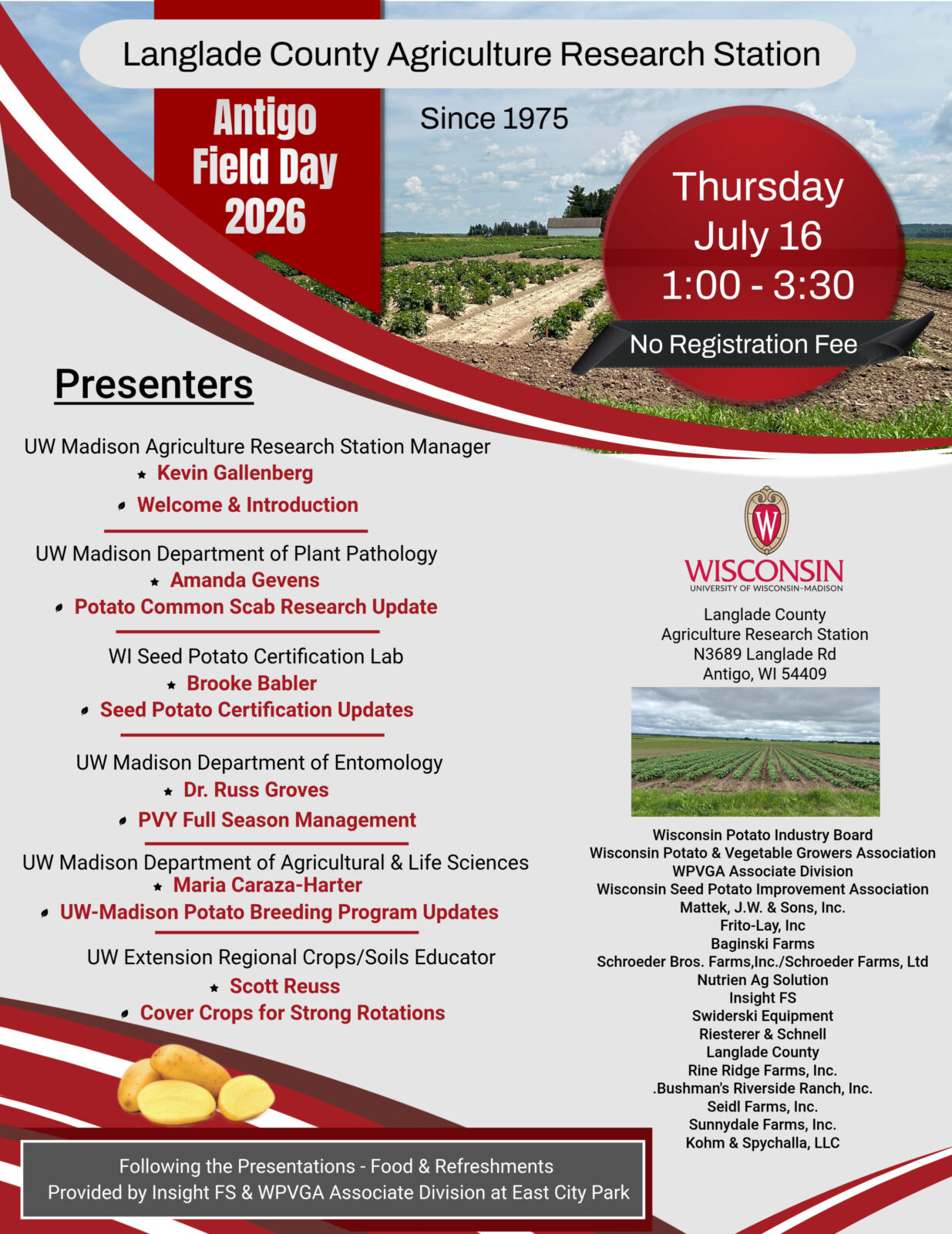
- Langlade Co. Airport Research Station Field Day Flier
Potato Production Update
Yi Wang, Associate Professor & Extension Potato and Vegetable Production Specialist, UW–Madison, Dept. of Plant and Agroecosystem Sciences, 608-265-4781, Email: wang52@wisc.edu
Weather outlook
The Wisconsin Agriculture Weather Outlook indicates that average temperatures were 4-8°F above normal across most of the state, with the eastern part of the state the most above normal. Some days had heat indices exceeding 100°F. The driest regions were the north-central and southeast counties, while some southwestern counties had rainfall totals between 3’’ and 6’’ last week.
Satellite-based soil moisture estimates indicate that drier-than-normal conditions persist across the northwest, north-central, and east-central counties. The outlook for mid-to-late July indicates statewide above-normal temperatures and below-normal precipitation probabilities. There will be minimal chances for rain over the next seven days. Late summer through early fall (July – September) might be cooler-than-normal in southern and central parts of the state, with rainfall chances leaning towards below normal for most parts of Wisconsin.
Hail damage
Some of the folks had questions about managing hail damage to their vegetable crops. Hail is one of the more unpredictable risks for home gardeners or commercial producers (see below: hail damage to potatoes, tomatoes, cucumbers, and chards). There are no preventive options once a storm develops, and the damage can range from minor leaf injury to severe canopy loss and yield reduction.
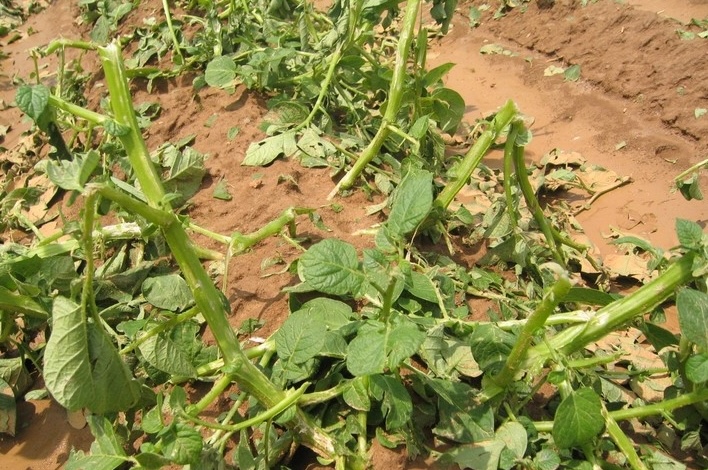
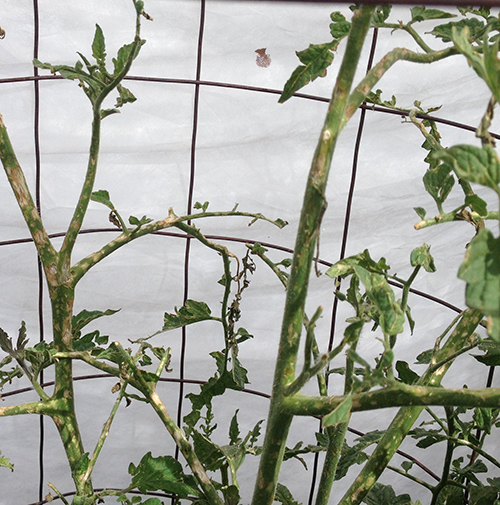
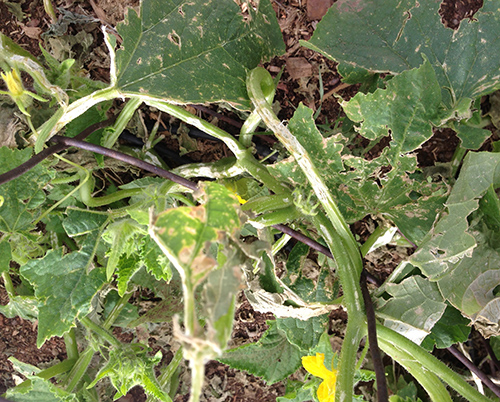
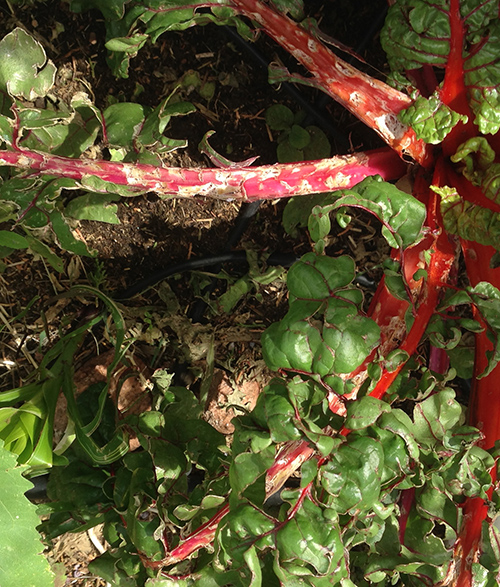
There are 4 factors that can determine the outcome of hail:
- Amount of defoliation: less than 30% of defoliation often leads to minimal yield loss because there remains enough leaf area to keep photosynthesis going on. Between 30 and 70% defoliation could be associated with more yield reduction due to limited carbohydrate synthesis. Severe defoliation exceeding 70% can significantly reduce yield, especially if stems are also damaged.
- When the hail occurs: early-season injury during crops’ vegetative growth is often the least damaging because plants still have time to regrow. Tuber initiation and early tuber bulking are the most sensitive periods when plants are highly vulnerable. Defoliation during this period usually reduces tuber set and tuber size in potatoes, resulting in fewer, smaller tubers. Later in the season, during tuber maturation, hail will have less impact on yield but can influence tuber quality and increase disease risks.
- Cultivar selection: late-maturing cultivars are better able to recover from hail damage, as they have more time in the growing season to outgrow it, particularly if favorable conditions persist. Early-maturing cultivars have a shorter recovery window, and thus similar damage at the same growth stage results in a greater proportional yield loss.
- Weather conditions after the hail event: these can affect how well the crops recover. Warm but not high temperatures, sufficient soil moisture, and minimal biotic stress favor strong regrowth. Under these conditions, plants produce new leaves to rebuild the canopy. In comparison, hot and dry spells can compound stress and slow down recovery; in addition, prolonged wet days following hail damage can increase the risk of disease development in damaged tissues.
Foliar nutrient applications are sometimes applied to stimulate regrowth. However, there is little evidence that these nutrients translate into higher yields at harvest. For potatoes, heavy nitrogen use after hail can shift growth towards vines and away from tuber setting and bulking, leading to a higher incidence of misshapen potatoes and those with hollow heart.
In summary, the crops’ natural ability to recover, in combination with favorable weather conditions, has a greater impact on yield than any input applied after the hailstorm. The best practice is to optimize recovery conditions by maintaining proper soil moisture, providing adequate but not excessive fertility, minimizing additional environmental stresses, and allowing time for regrowth. If possible, slightly extending the growing season may also help offset canopy loss by giving the plants more time to grow.
Vegetable Disease Update
Amanda Gevens, Professor & Extension Vegetable Pathologist, UW–Madison, Dept. of Plant Pathology, 608-575-3029, gevens@wisc.edu
Current P-Day (Early Blight) and Disease Severity Value (Late Blight) Accumulations
Thanks to Ben Bradford, UW- Madison Entomology for supporting this effort and providing a summary reference table: https://agweather.cals.wisc.edu/thermal-models/potato. A Potato Physiological Day or P-Day value of ≥300 indicates the threshold for early blight risk in potato and triggers preventative fungicide application. A Disease Severity Value or DSV of ≥18 indicates the threshold for late blight risk and triggers preventative fungicide application in potato. Data from the modeling source: https://agweather.cals.wisc.edu/vdifn are used to generate these risk values in the table below. I’ve estimated early, mid-, and late planting dates by region based on communications with stakeholders. These are intended to help in determining optimum times for preventative fungicide applications to limit early and late blight in Wisconsin.
| Location | Planting Date | 50% Emergence Date | Disease Severity Values (DSVs) through 7/11/26 | Potato Physiological Days (P-Days) through 7/11/26 | |
| Spring Green | Early | Apr 10 | May 7 | 25 | 499 |
| Mid | May 5 | May 20 | 23 | 428 | |
| Late | May 16 | June 2 | 23 | 332 | |
| Arlington | Early | Apr 12 | May 8 | 12 | 493 |
| Mid | May 6 | May 23 | 12 | 418 | |
| Late | May 20 | June 4 | 12 | 321 | |
| Grand Marsh | Early | Apr 13 | May 9 | 26 | 470 |
| Mid | May 6 | May 22 | 26 | 411 | |
| Late | May 21 | June 5 | 26 | 306 | |
| Hancock | Early | Apr 14 | May 11 | 21 | 466 |
| Mid | May 10 | May 30 | 20 | 351 | |
| Late | May 23 | June 6 | 19 | 298 | |
| Plover | Early | Apr 15 | May 12 | 21 | 465 |
| Mid | May 10 | May 30 | 19 | 353 | |
| Late | May 25 | June 6 | 18 | 300 | |
| Antigo | Early | May 12 | May 29 | 20 | 340 |
| Mid | May 25 | June 5 | 21 | 294 | |
| Late | June 8 | June 20 | 12 | 181 | |
| Rhinelander | Early | May 15 | June 6 | 18 | 275 |
| Mid | May 28 | June 10 | 16 | 238 | |
| Late | June 9 | June 25 | 10 | 143 | |
Late blight of potato/tomato
With the exception of the Arlington area, most potato production areas have accumulated Disease Severity Values or DSVs at or surpassing the action threshold of 18 as of 7/11 – this is 0-7 more DSVs since last week. This indicates that late blight favorable weather has occurred, since ~50% crop emergence and we have accumulated enough late blight-favorable weather to warrant a preventative fungicide application to target this disease. Fields with ≥18 DSVs should receive preventative fungicide applications to manage for late blight. https://vegpath.plantpath.wisc.edu/diseases/potato-late-blight/ An updated list of fungicides for management potato late blight in Wisconsin 2026 is provided here: https://vegpath.plantpath.wisc.edu/resources/late-blight-fungicides/
Early blight of potato
Most potato fields south of Antigo have surpassed the treatment threshold of 300 P-Days. The earliest plantings in Antigo (emergence late May/early June) are now at or above threshold. Preventative fungicide applications are warranted for these fields. In the past week regions of the state accumulated between 57 and 64 P-Days. For support in selecting fungicides, please consult the A3422 Commercial Vegetable Production in Wisconsin: https://vegpath.plantpath.wisc.edu/resources/a3422/
Cucurbit Downy mildew update
No confirmations of downy mildew in cucurbits in the upper midwestern US at this time. While Dr. Mary Hausbeck’s Michigan State University downy mildew spore trapping network is reporting the presence of pathogen spores in several counties of Michigan, there have been no field disease reports. Downy mildew on cucumbers and muskmelon/cantaloupe (likely Clade 2 strain type) in Georgia and Florida were reported in late June 2026. https://cdm.ipmpipe.org/ Based on this information, there is some risk for downy mildew on cucumbers in Wisconsin with relatively lower risk on muskmelon/cantaloupe. Even lower risk on pumpkin and squash at this time. Hotter and drier weather will reduce risk of infection and development of disease, whereas cooler and wetter weather will promote disease. For more information: https://vegpath.plantpath.wisc.edu/diseases/cucurbit-downy-mildew/
It’s important to use fungicides with demonstrated performance in managing downy mildew and to treat preventatively for best control. The alphabetic list below was developed by Dr. Mary Hausbeck from fungicide performance in her Michigan trials in recent years. Fungicides should be alternated to mitigate the development of resistance.
- Elumin + chlorothalonil or mancozeb
- Omega (Orbus) + chlorothalonil or mancozeb
- Orondis Opti (chlorothalonil is part of the premix)
- Previcur Flex + chlorothalonil or mancozeb
- Ranman + chlorothalonil or mancozeb
- Zampro + chlorothalonil or mancozeb
For diagnostic and management support in Wisconsin, please consider contacting Dr. Amanda Gevens (gevens@wisc.edu) or our Plant Disease Diagnostic Clinic (pddc@wisc.edu).
Vegetable Insect Update
Russell L. Groves, Professor and Associate Department Chairperson, UW–Madison, Department of Entomology, 608-262-3229 (office), (608) 698-2434 (cell), e-mail: rgroves@wisc.edu. Vegetable Entomology Webpage: https://vegento.russell.wisc.edu/
Potato virus Y and management
Important to note, aphid species that colonize potatoes (Green peach aphid and Potato aphid) were again detected in central Wisconsin fields over past week (July 5 – July 12) and also in seed potato fields in northern Wisconsin. The Aphid Suction Trap Network (valid through mid-June only) has indicated low numbers of potato-colonizing species have been detected flying in the landscape of the upper midwest. It is important to note, the data reported by the Suction Trap Network is 25 days late (June 15) and is only offered as evidence of low flight activity in mid June.
Initiate applications (of insecticides) after the appearance of colonizing aphids have become detected and established in the crop. An initial foliar application of a selected insecticide should be applied to the entire field and followed by a second foliar application of the same active ingredient one week later. For most products, only two successive applications are allowed per crop season for control of colonizing aphids before rotation to a new mode-of-action is suggested. Examples of exceptions to this include flonicamid (Beleaf 50SG/Carbine 50WG®) and imidacloprid (AdmirePro®). which can be applied over 3 successive foliar applications. Continue to scout field throughout the time interval of the application series and consider rotation to another effective aphicide mode of action if colonizing aphids persist in the crop.
All foliar applied aphicides should be applied with mild, penetrating surfactant and ensure the tank pH is not alkaline (pH < 7.0). Ground-application is also advised especially after row closure and when canopies begin to fall over in the late summer. Paraffinic oil applications can act as a mild penetrant, so not additional penetrating adjuvants are needed if paraffinic oils are applied with insecticides. As a reminder, all insecticide and paraffinic oil combinations should be delivered using application equipment that can ensure the most complete canopy coverage and using sufficient delivery volume.
Corn earworm – https://vegento.russell.wisc.edu/pests/corn-earworm/
Pheromone captures (as reported from the Wisconsin Home Pest Survey) now confirm adult moths of the corn earworm over the past week in select locations of the state. These captures are relatively low but numbers could increase in the coming week as conditions for moth flights were good in the past week (Insect Forecast site). These adults represent second generation, adult moths that are expected to continue flights into the region and silking sweet corn should be scouted for eggs and early instar larvae.
Once larvae enter the ear, they’re protected from insecticides. Therefore, treatment timing is critical, and control must be targeted at the adults, eggs, and young larvae before they’re protected. The amount of time for egg hatch varies with temperature, but during periods of hot summer days and nights, eggs can hatch within 24 hours after they’re laid. Thus, each day’s delay in treatment may reduce the number of clean ears by 10 to 15%.
Insecticides must be present on vulnerable silks when eggs hatch. The first application is the most critical and tank-mixes containing an ovicide (an egg killer) and a larvicide (eg. spinosad, spinetoram, chlorantraniliprole) are recommended. On sweet corn, treat every 5 to 7 days beginning when silks first appear and continuing until they are brown in color. Discontinue treatments 10 days before harvesting fresh market sweet corn as additional sprays will not improve product quality.
Langlade Agricultural Research Station Field Day