Potato Black Dot
Description
Black dot is caused by a soil-, seed-, and debris-borne fungus that can infect roots, stolons, stems, and tubers. The pathogen is a contributor to the early die complex and is typically enhanced by stress conditions, including temperature and moisture extremes. As a result, black dot causes a reduction in yield and tuber size, and the pathogen causes tuber blemish, reducing marketability and storability. Symptoms on tubers appear as small, black, pinhead-sized structures on the skin surface.
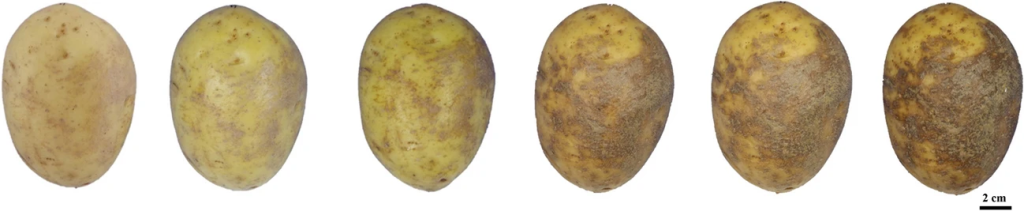
Colletotrichum coccodes builds up in the soil with every potato (or other host crop) rotation and can survive for many years. Knowledge of cultivar resistance is limited to the observations of researchers, growers, and agronomists, however, it is generally understood that thinner-skinned cultivars have higher susceptibility to black dot than thicker or russet-skinned cultivars. Soil fumigation can reduce the quantity of the black dot pathogen in soils, but it is not favored as a management tactic by many, including growers, due to cost and potential negative environmental impact. Some fungicide applications reduce the effect of the stem or early die phase of the disease. The application of the QoI fungicide azoxystrobin in-furrow or prior to first-hilling can reduce the incidence of black dot on daughter tubers. Multiple factors such as soil inoculum level and character, and cultivar susceptibility can influence the efficacy of in-furrow azoxystrobin application.
Some research suggests that the longer tubers are exposed to soil infested with the black dot pathogen, the more severe the black dot symptoms on the tubers. Black dot tuber lesions appear at both the stolon end and arbitrarily around the tuber, suggesting multiple potential infection points from systemic plant infections and via direct tuber contact with the pathogen in the soil. It is generally understood that new tuber infections do not occur during storage, but increases in blemish severity are commonly observed. Black dot tuber blemish is very difficult to distinguish from silver scurf and other skin abnormalities, so much so, that the USDA lumps these into a single category of external discoloration. This makes estimating losses to the disease extremely challenging.
Late-season management tips
- Crop rotation: Fields with a history of black dot should ideally rotate out of potatoes for 3+ years, avoiding solanaceous hosts.
- Irrigation management: Over-irrigation and prolonged soil wetness favor disease development. As vines decline, avoid excess water.
- Desiccation timing: Prompt vine kill after natural senescence limits inoculum transfer from vines to tubers.
- Harvest timing: Avoid long intervals between vine kill and harvest, which increases infection risk.
- Handle tubers carefully: Wounds and bruises increase disease entry points and speed blemish development in storage.
- Monitor storability: Keep close watch on lots destined for longer-term storage, as these disease symptoms can exacerbate on tubers over time. Silver scurf can spread and create new infections. Black dot is not known to spread via spores in storage, but symptoms can worsen. While these diseases may not be as dramatic as late blight or early dying, their subtle but persistent effects can significantly impact storage success and market returns.

For diagnostic and management support in Wisconsin, please consider contacting Dr. Amanda Gevens (gevens@wisc.edu) or our Plant Disease Diagnostic Clinic (pddc@wisc.edu).
Last updated: