Vegetable Crop Update – Jun 21, 2026

In this issue:
- Potato early and late blight disease risk model updates
- Onion disease updates
- Armyworm, Cutworm, and Colorado Potato Beetle updates and management
Amanda Gevens, Professor & Extension Vegetable Pathologist, UW–Madison, Dept. of Plant Pathology, 608-575-3029, gevens@wisc.edu
Current P-Day (Early Blight) and Disease Severity Value (Late Blight) Accumulations will be posted at our website and available in the weekly newsletters
Thanks to Ben Bradford, UW- Madison Entomology for supporting this effort and providing a summary reference table: https://agweather.cals.wisc.edu/thermal-models/potato. A Potato Physiological Day or P-Day value of ≥300 indicates the threshold for early blight risk in potato and triggers preventative fungicide application. A Disease Severity Value or DSV of ≥18 indicates the threshold for late blight risk and triggers preventative fungicide application in potato. Data from the modeling source: https://agweather.cals.wisc.edu/vdifn are used to generate these risk values in the table below. I’ve estimated early, mid-, and late planting dates by region based on communications with stakeholders. These are intended to help in determining optimum times for preventative fungicide applications to limit early and late blight in Wisconsin.
| Location | Planting Date Dates in future are anticipated or not yet listed (To Be Determined or TBD) | 50% Emergence Date | Disease Severity Values (DSVs) through 6/20/26 | Potato Physiological Days (P-Days) through 6/20/26 | |
| Spring Green | Early | Apr 10 | May 7 | 11 | 326 |
| Mid | May 5 | May 20 | 9 | 254 | |
| Late | May 16 | June 2 | 9 | 158 | |
| Arlington | Early | Apr 12 | May 8 | 9 | 318 |
| Mid | May 6 | May 23 | 9 | 243 | |
| Late | May 20 | June 4 | 9 | 146 | |
| Grand Marsh | Early | Apr 13 | May 9 | 12 | 295 |
| Mid | May 6 | May 22 | 12 | 236 | |
| Late | May 21 | June 5 | 12 | 131 | |
| Hancock | Early | Apr 14 | May 11 | 11 | 289 |
| Mid | May 10 | May 30 | 10 | 175 | |
| Late | May 23 | June 6 | 9 | 121 | |
| Plover | Early | Apr 15 | May 12 | 13 | 285 |
| Mid | May 10 | May 30 | 11 | 174 | |
| Late | May 25 | June 6 | 10 | 121 | |
| Antigo | Early | May 12 | May 29 | 10 | 166 |
| Mid | May 25 | June 5 | 10 | 121 | |
| Late | June 8 | June 20 | 0 | 7 | |
| Rhinelander | Early | May 15 | June 6 | 10 | 111 |
| Mid | May 28 | June 10 | 8 | 71 | |
| Late | June 9 | TBD | TBD | TBD | |
Late blight of potato/tomato
Early and mid-planted potatoes of Wisconsin have accumulated up to 13 Disease Severity Values or DSVs as of 6/20. This indicates that late blight favorable weather has occurred, since ~50% crop emergence. However, we have not yet accumulated enough late blight-favorable weather to warrant a preventative fungicide application to target this disease. As we move into this coming week, temperatures are supposed to be a bit cooler and with some scattered showers. Such conditions are promotive to late blight and preventative treatment may be necessary. https://vegpath.plantpath.wisc.edu/diseases/potato-late-blight/
Early blight of potato
Once we see potato crops at 50% emergence, P-Days accumulate. P-Day values will continue to amass and indicate optimum conditions for early blight disease caused by Alternaria solani. Fungicides can provide good control of early blight in vegetables when applied early on in infection. Multiple applications of are recommended for optimum disease control through the season to vine-kill. Earliest emerging fields in the Spring Green and Arlington areas have surpassed the treatment threshold of 300 P-Days. Preventative fungicide applications are warranted for such fields at this time. https://vegpath.plantpath.wisc.edu/diseases/potato-early-blight/
Onion Disease Updates
As onion crops across Wisconsin continue rapid vegetative growth it is a good time to intensify scouting efforts for foliar diseases. Recent weather patterns featuring periods of rainfall, prolonged leaf wetness, and overnight dew have created favorable conditions for several important onion pathogens. While reports of disease have been limited, growers should be vigilant for the early development of Botrytis leaf blight, Stemphylium leaf blight, and onion downy mildew, as timely intervention remains the most effective management strategy.
Botrytis Leaf Spot/Blight
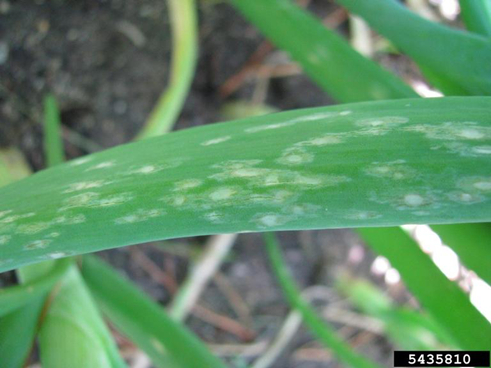
Botrytis leaf spot or blight, caused primarily by Botrytis squamosa, is often among the first foliar diseases observed in onion fields. Initial symptoms appear as small white lesions surrounded by pale green halos. Under favorable conditions, lesions can coalesce, resulting in blighting of leaf tips and reduced photosynthetic area. Cool temperatures, frequent dew, and extended leaf wetness periods favor disease development. Growers should scout fields weekly, paying particular attention to dense canopies and areas with prolonged moisture retention. Maintaining adequate air movement within the canopy, avoiding excessive nitrogen fertility, and initiating protectant fungicides before disease becomes established can help reduce losses.
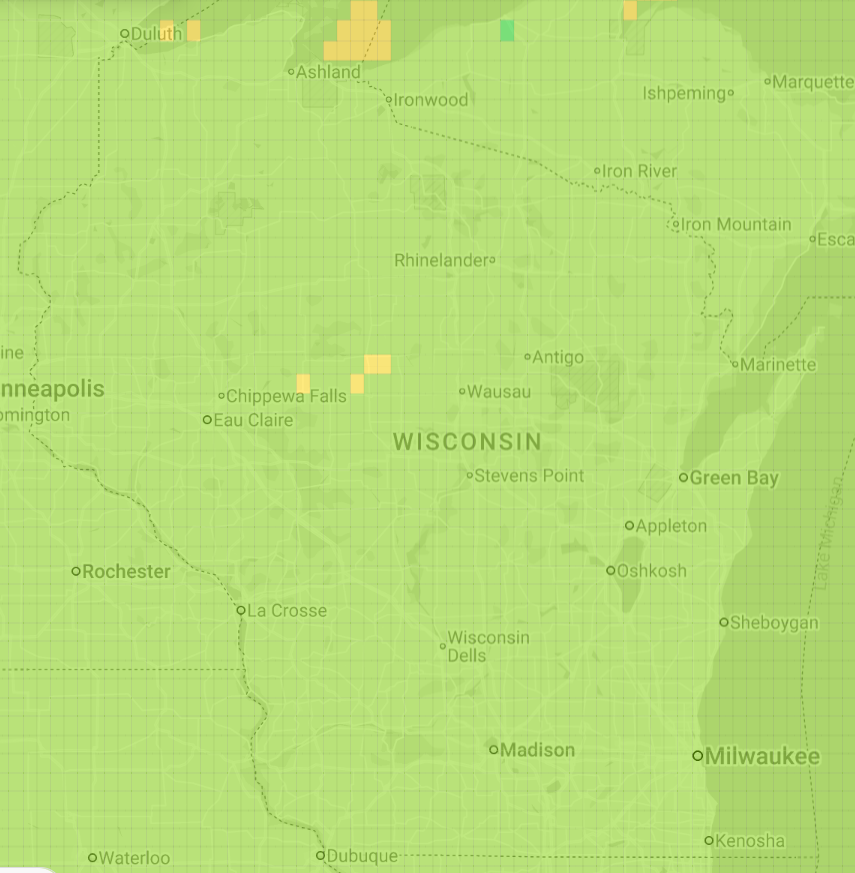
We host a predictive modeling tool to help time preventative fungicide applications for management of Botrytis in onion at our UW-Vegetable Disease and Insect Forecasting Network website. To view the predicted onion Botrytis risk on any given day, visit the Vegetable Disease and Insect Forecasting Network (VDIFN) website. From the Disease tab, select the “Botrytis leaf blight” model. This BOTCAST model uses a cumulative disease severity index (CDSI) computed from gridded NOAA weather data to calculate the risk of onion botrytis development, which is displayed as a colored map overlay.
- Threshold 1: (21 ≤ CDSI < 31) Warning threshold of “no spray applied unless rain predicted or overhead irrigation applied”
- Threshold 2: high risk of rapid disease development, apply initial spray as soon as possible
- CDSI > 40: extremely elevated risk
The start point should be set to the date of crop emergence. Click any grid point in VDIFN to get more detailed weather and disease progression information for that location. Currently, most of the state of Wisconsin is at roughly 12 severity values (see map below), but risk values are gaining with the cooler and wetter weather.
Stemphylium Leaf Blight
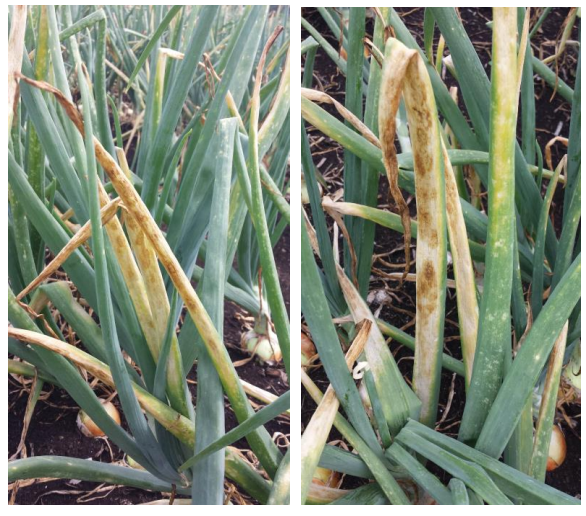
Stemphylium leaf blight caused by the fungus Stemphylium vesicarium has emerged as one of the most economically important onion foliar diseases in North American production regions and is increasingly responsible for defoliation and yield loss. Lesions begin as tan to brown, water-soaked spots that elongate and may rapidly blight entire leaves. Lesions can look darker in color when the pathogen is producing spores. Diseased foliage can compromise the bulb, reducing yield and leading to secondary infections. Stemphylium often exploits stressed or wounded tissue and is commonly associated with prior injury from onion thrips, herbicide stress, drought, heat stress, or downy mildew infection.
To manage, scout regularly to identify disease before significant spread and damage. At this time of year, growers should focus on minimizing plant stress. Careful irrigation management, balanced fertility, avoidance of herbicide injury, and effective thrips management can delay disease onset. Rotation away from onions and other alliums for three to four years, destruction of cull piles, and incorporation of crop residue help reduce inoculum sources. Once Stemphylium becomes established, control can be difficult, making preventative fungicide programs especially important. https://vegpath.plantpath.wisc.edu/diseases/onion-stemphylium-leaf-blight/
Onion Downy Mildew
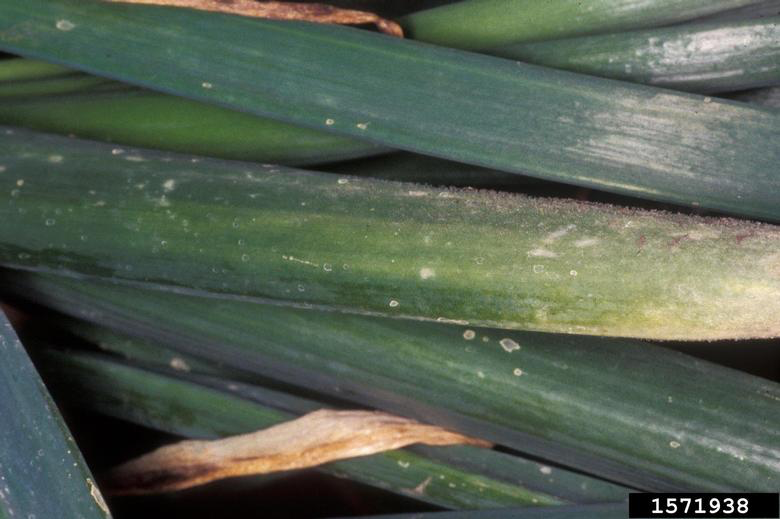
Although to my knowledge, not detected at this time, onion downy mildew remains one of the most destructive diseases of onion and can develop rapidly when temperatures are moderate and humidity remains high. Early symptoms often appear as pale green or yellow areas on leaves, followed by characteristic gray to violet sporulation during humid mornings. Infected leaves collapse prematurely and may serve as entry points for secondary pathogens including Stemphylium. Growers should carefully inspect fields during early morning hours when sporulation is most visible. Fields with dense canopies, heavy dews, fog events, or prolonged periods of leaf wetness are at greatest risk. Prompt management is critical because epidemics can develop quickly under favorable environmental conditions. https://vegpath.plantpath.wisc.edu/diseases/onion-downy-mildew/
As we enter the latter half of June, the most important management strategy is prevention. Growers are encouraged to scout fields at least weekly and increase frequency following rainfall or prolonged periods of leaf wetness, monitor fields with a history of foliar disease closely, maintain balanced fertility and avoid excessive nitrogen applications, minimize crop stress from irrigation deficits, herbicide injury, and onion thrips feeding, and begin preventative fungicide programs before disease becomes established and rotate FRAC groups to preserve fungicide efficacy.
The combination of warm temperatures, increasing canopy density, and periodic rainfall expected as we move into July will increase disease risk substantially. Early detection and preventative management now will provide the greatest opportunity to protect foliage, maximize bulb sizing, and preserve yield potential later in the season.
Specific information on fungicides can be found at the following resources:
- For home garden fungicide recommendations, see Home Vegetable Garden Fungicides (D0062), a fact sheet available through the UW Plant Disease Diagnostic Clinic website. Always follow label directions carefully.
- For commercial operations, see Commercial Vegetable Production in Wisconsin (A3422). This guide offers the latest recommendations for disease, insect, and weed management in Wisconsin’s most common commercial vegetable crops. Also included are lime and fertilizer recommendations as well as insect identification information and keys.
- UW Plant Disease Diagnostics Clinic. The University of Wisconsin–Madison/Extension Plant Disease Diagnostics Clinic (PDDC) provides assistance in identifying plant diseases and provides educational information on plant diseases and their control.
Vegetable Insect Update – Russell L. Groves, Professor and Associate Department Chairperson, UW–Madison, Department of Entomology, 608-262-3229 (office), (608) 698-2434 (cell), e-mail: rgroves@wisc.edu
Vegetable Entomology Webpage: https://vegento.russell.wisc.edu/
Armyworm – (https://vegento.russell.wisc.edu/pests/#leps)
Adult moths cannot survive the winter temperatures in the Midwest, and as a result they migrate northward on spring storm fronts from the southern U.S. Upon arrival they mate and lay eggs on a variety of grasses and grassy weeds. In Wisconsin, crop consultants and farmers frequently rely on moth trapping networks and degree-day models to predict outbreaks. Above average moth flight numbers in spring trigger intensive field scouting for caterpillars. Moth captures reported by the Wisconsin Home Pest Survey indicate statewide activity and captures in mid-June. These captures signal that adults are present over much of the state and have been laying eggs for the past week to 10 days. If caterpillars are observed reaching damaging levels (e.g., 3 or more worms per square foot in hay/pastures), chemical controls containing spinosad (Conserve®, Blackhawk®, Delegate®) or the synthetic pyrethroid bifenthrin (Brigade®, Fanfare®) should be used to target early larval stages prevent crop loss. Management should be implemented before larvae reach later instars (e.g., > 1” in length) as these larvae are much harder to kill.
True armyworms are dark caterpillars measuring up to 2 inches long. They have a dark stripe running lengthwise on the side with a yellow stripe beneath. Dark and light stripes alternate along their back. Armyworms move up from grassy weeds within cornfields or migrate into cornfields from small grain or forage fields. They may hide in soil crevices and beneath soil clods by day. At night, they chew corn leaves and weaken plants.
Cutworms – (https://vegento.russell.wisc.edu/pests/cutworm/)
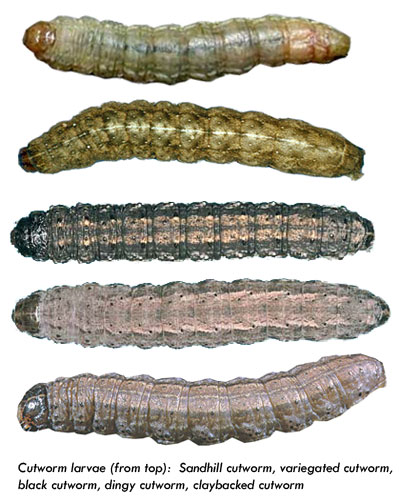
Intermittent populations of newly hatched cutworm larvae are becoming more prevalent across central and northern Wisconsin. In areas across southern Wisconsin, populations and associated damage may be overlapping with fields infested with true armyworm. Early cutworm larvae feed on leaves, but are unable to chew entirely through, creating a “window pane” effect. As they mature, they create small pinholes in the leaves; large infestations of cutworms can completely defoliate plants. During the fourth instar, larvae begin cutting plant stems. The ½ inch worms chew through the stem at or just below the soil surface. This type of injury is common during extended periods of dry weather. If plants are larger, larvae may not be able to cut through the stem but will burrow into it below ground level, causing plants to wilt and die.
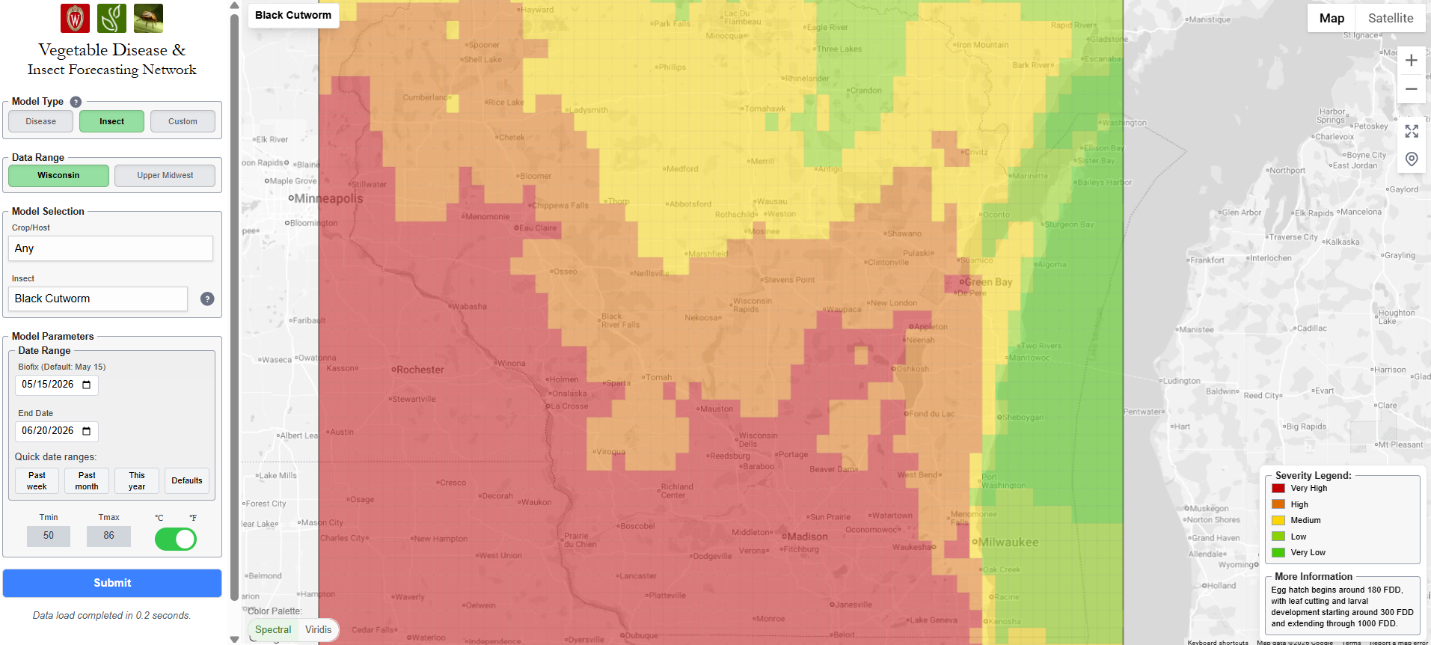
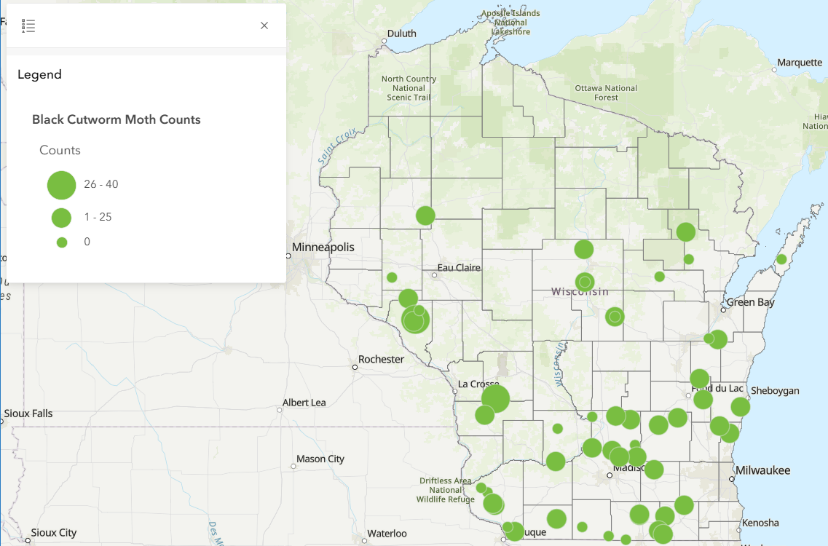
Timely detection is critical for insecticide treatments to be effective or economical. The best way to do this is to monitor the arrival of adult moths. As noted previously, watch the Wisconsin Department of Agriculture, Trade & Consumer Protection (DATCP) Home Pest Survey results and associated reports. Alternatively, monitor for the presence of adults using a black light trap. When 9 or more adult moths have been caught on each of two consecutive nights, begin calculating degree day accumulation. A number of parasitic wasps, flies, and predaceous ground beetles help keep cutworm numbers down. Birds also help control the population by feeding on the larvae. Cutworms are most problematic in low, wet, grassy areas. Since female moths prefer to lay eggs in weedy areas, keeping weeds controlled will lessen the possibility of damage. Avoid planting susceptible crops in low, wet areas or in rotations following sod. Cultivate as needed in fall and spring to disrupt the cutworms’ life cycle and to destroy host weeds. If non-chemical control measures are not sufficient for adequate control, begin treating at the first sign of pests cutting and repeat every 7 days until the damage has ceased.
Colorado potato beetle – (https://vegento.russell.wisc.edu/pests/colorado-potato-beetle/)
Potato producers and scouts need to continue checking potato fields for colonizing Colorado potato beetle (CPB) adults and large numbers of egg masses, especially in northern Wisconsin. In the seed growing region of Wisconsin, adult colonization and initial egg deposition is underway and early detection of larval populations can be especially critical to initiate applications at the correct time.
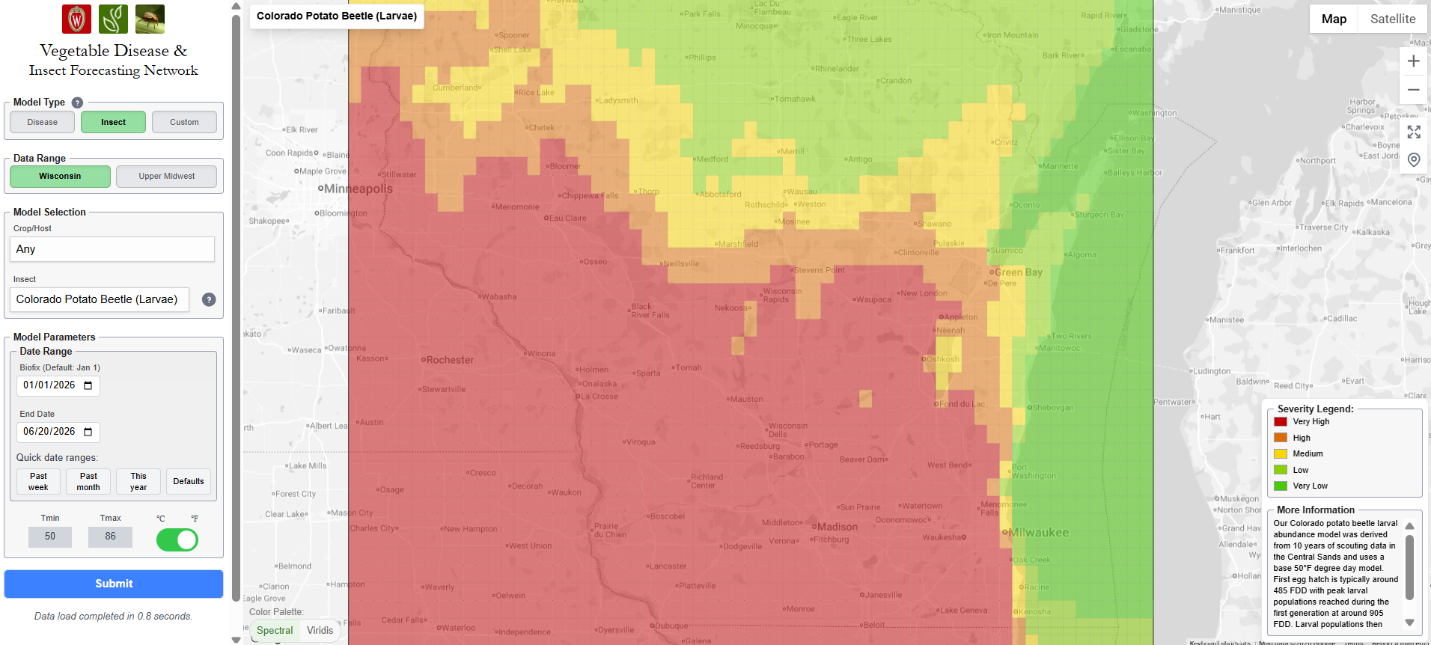
The newly registered isocycloseram (Zivalgo®) is an option for use against early larval populations. This active ingredient represents a new mode of action class (Group 30 meta diamide) different from the anthranilic diamides (Group 28) we have used for nearly 15 years (e.g. Besiege®, Coragen®, Elevest®, Exirel®, Minecto Pro®, Vantacor®, etc.). The sequencing and rotation of products targeting populations of CPB in this region should be based upon history of product use. If producers feel they have (over-) used the Group 28 anthranilic diamides for successive years, then the use of novel isocycloseram may be a great rotation option for their 2nd generation control. Alternatively, if producers feel they have relied extensively upon active ingredients such as novaluron (Rimon®), spinetoram (Delegate®, Radiant®), or abamectin (Agri-Mek®) during the 1st generation, then Zivalgo may be a better early option. Although the new Zivalgo® possesses a broad spectrum of activity against a variety of insects, it will NOT be an effective option against potato-colonizing aphids that can transmit PVY (regrettably).