Vegetable Crop Update – May 10, 2026

In this issue:
- EPA Draft Endangered Species Act Fungicide Strategy – feedback requested by June 29
- Silver Scurf and Black Dot in Potatoes
Amanda Gevens, Professor & Extension Vegetable Pathologist, UW–Madison, Dept. of Plant Pathology, 608-575-3029, gevens@wisc.edu
Environmental Protection Agency (EPA) Draft Endangered Species Act (ESA) Fungicide Strategy – Feedback Requested by June 29
On May 1, the EPA released its draft Fungicide Strategy to bring the Agency into compliance with its obligations under the Endangered Species Act (ESA). The Fungicide Strategy largely follows the approaches used in the previously developed Herbicide and Insecticide Strategies. However, there are some differences regarding how vertebrate species are considered. Additionally, the draft focuses on regional patterns of fungicide use primarily driven by moisture/rainfall that increases disease pressure. The National Potato Council (NPC) is working with the Minor Crop Farmer Alliance (MCFA) to develop comments by the June 29 deadline. More information about the draft Strategy should be available here. The EPA is hosting a public webinar on May 20 at 2 p.m. ET to provide an overview of the draft Strategy, discuss how it will be implemented through registration and registration review, and answer questions. Registration is available here.
Black Dot & Silver Scurf Management in Potato
Wisconsin potato growers have increasingly reported concerns with black dot and silver scurf over the past several years. These diseases are often subtle during crop development yet can significantly impact tuber appearance, storability, and marketability by harvest and throughout storage. Unlike explosive diseases such as late blight, black dot and silver scurf tend to develop quietly and are heavily influenced by environmental stress, soil conditions, crop injury, and long-term production practices. As weather patterns become more variable and production systems evolve, these diseases appear to be gaining importance across the industry.
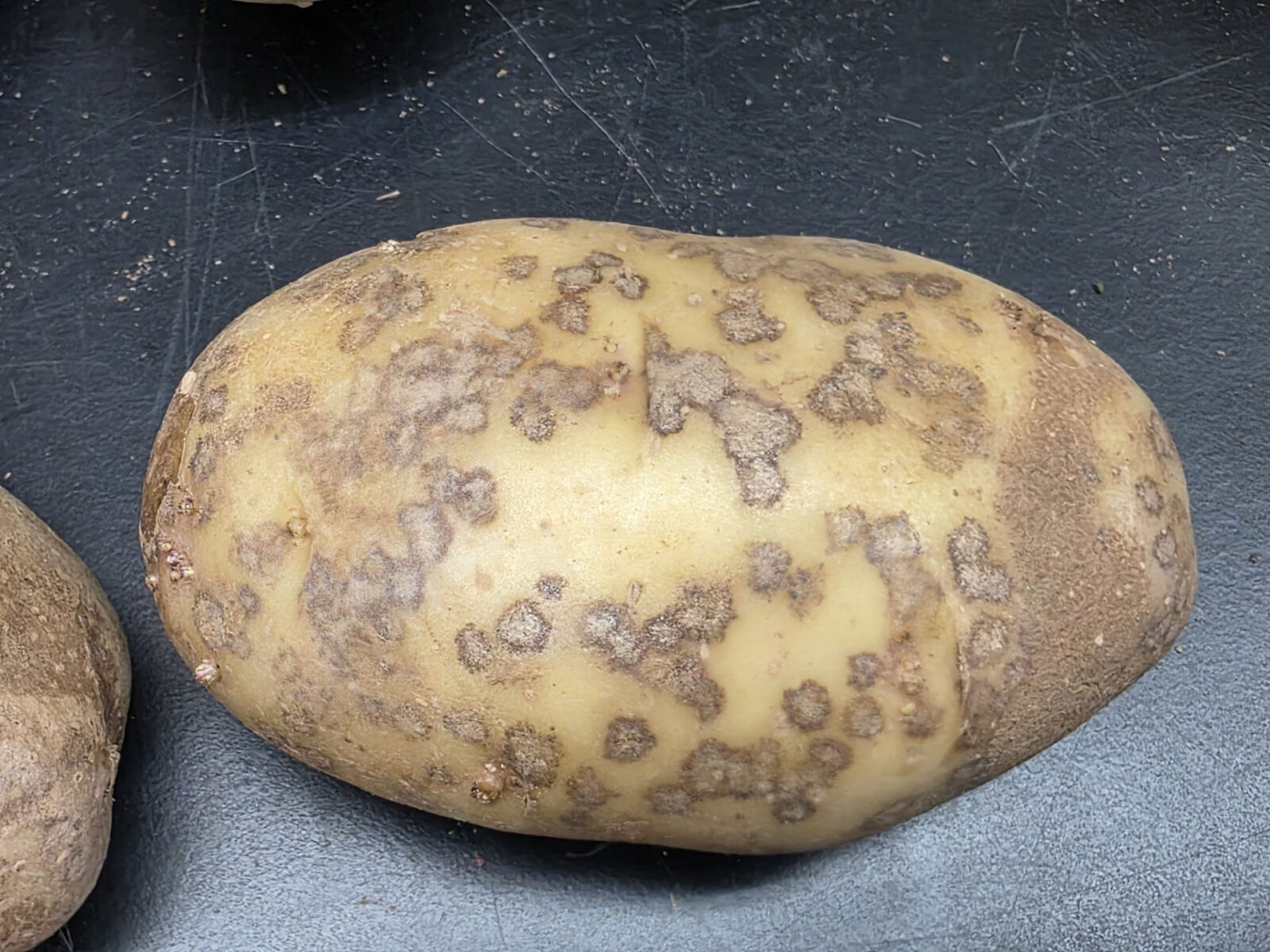
Black dot is caused by the fungus Colletotrichum coccodes. Photo of tuber symptoms on right. The pathogen survives in soils and crop residue as structures called microsclerotia. One of the challenges with black dot is that infection often occurs very early in the season but remains symptomless for weeks if not months. Similar to other Colletotrichum pathogens, the fungus infects plants latently or mildly during early growth stages and later becomes more aggressive and symptomatic once the crop begins allocating energy into tuber production. Symptoms may include: premature vine decline, lower stem discoloration, reduced root vigor, uneven crop maturity, and tuber blemishes. Black dot is frequently associated with the Potato Early Die complex.
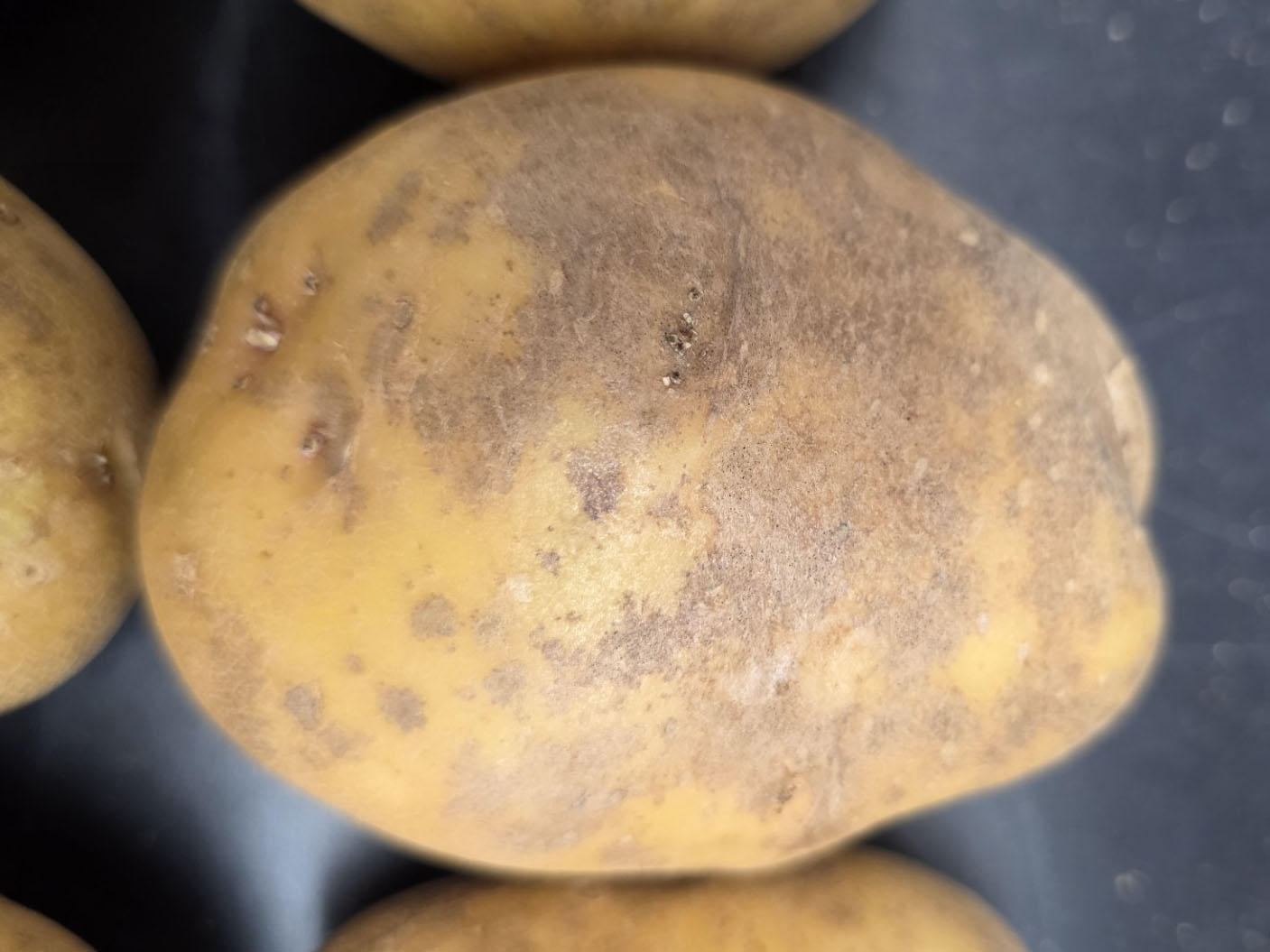
Silver scurf is caused by the debris and seedborne fungal pathogen Helminthosporium solani and primarily affects potato tuber skin. Photo of tuber symptoms on left. The disease can be noted at time of harvest, but most often becomes more visible during storage and may appear as: silvery or bronze discoloration, patchy skin blemishing, increased shrink and moisture loss, and reduced visual quality. Silver scurf can continue developing during storage, particularly under humid conditions and extended storage periods.
Why Are These Diseases Increasing?
Several factors may be contributing to the increasing occurrence of black dot and silver scurf across Wisconsin and other potato-producing regions.
- Warmer winters and changing weather patterns. Warmer winter soil temperatures may preserve infected crop debris and pathogen inoculum more effectively than in the past. In addition, growers increasingly face intense rainfall events, rapid drying cycles, high winds, blowing sand (creates wound sites for earliest infections on newly emerged potato crops), hail, unexpected cold, and heat extremes during spring and fall “shoulder seasons.” These weather fluctuations can physically damage plants and create favorable conditions for infection.
- Reduced tillage and residue preservation. Reduced tillage systems in crops prior to the current year’s potato may preserve infected residue longer and slow decomposition of pathogen-infested material. For black dot especially, infected crop debris can remain an important inoculum source. Avoiding excessive undecomposed residue at planting, allowing adequate decomposition time, maintaining good hill drainage and aeration, and considering brassica cover crops where appropriate can help limit inoculum.
- Seedborne inoculum. Even certified seed can harbor low or asymptomatic levels of these pathogens. Silver scurf, in particular, is strongly associated with seedborne inoculum and storage contamination.
- Cultivar susceptibility. Some modern cultivars may have greater susceptibility to silver scurf and black dot than varieties commonly grown in earlier decades.
- Fungicide resistance concerns. In conventional systems, reduced fungicide sensitivity may contribute to reduced disease suppression over time.
Early Season Infection Is Critical. The period emergence through first hilling is especially important for black dot infection. Young stems can become damaged by blowing sand, cultivation, hail, or other physical injury. These wounds can become entry points for Colletotrichum coccodes. Once lower stem infections develop, the pathogen may contribute to early vine decline, move downward on stolons and to tubers, or produce spores that wash into the hill zone during irrigation or rainfall. In conventional production systems, strobilurin (FRAC 11) and SDHI (FRAC 7) fungicides such as azoxystrobin and boscalid have shown suppression of black dot when applied during early stem development (in-furrow, and/or prior to row touch). For silver scurf, treatment on seed and in-furrow with fungicides in the strobilurin and SDHI groups, as well as the phenylpyrrole group (FRAC 12 such as fludioxonil) can limit the progression of the pathogen.
Management and Prevention
Cultivation Practices and Soil Moisture Management. Many growers are reconsidering how aggressive cultivation practices may influence blemish disease development. Frequent deep cultivation may dry soils excessively, damage roots and stems, increase crop stress, and create more infection opportunities. Maintaining stable hill moisture and minimizing unnecessary soil disturbance or plant injury during early crop development may help reduce disease pressure.
Poultry-Based Fertility Amendments and Tuber Quality. Questions also arise regarding poultry-based fertilizers and pelletized manure amendments and their role in these blemish diseases. I do not have research data to provide specific disease management recommendations in this regard, but inputs that damage the tuber periderm may provide entry for pathogen infection. Salt injury or elevated electrical conductivity in the hill zone can result from soluble salts such as potassium, sodium, and ammonium. Under certain conditions, this may contribute to tubers with a rough finish, uneven tuber surfaces, or defects resembling burn or “elephant hide.” Poorly composted poultry manure or unstable pelletized products may contain relatively high soluble salt levels. In addition, poultry-based amendments can alter soil microbial communities and potentially increase disease pressure, especially under higher soil pH, and dry soil conditions, and concentrated placement near seed pieces. To reduce risk, avoid direct in-furrow placement near seed pieces, allow time for mineralization before planting, incorporate thoroughly, and irrigate where possible to reduce localized salt or ammonia accumulation. Broadcast incorporation may reduce concentrated hill-zone effects compared to heavily banded applications, particularly when salt levels are elevated.
Cover Crops and Green Manure Considerations. Cover crops and green manures remain valuable for soil health, but species selection and residue management matter.
Black Dot Has a Broad Reservoir Range. The black dot pathogen can survive or colonize a wide range of plant material. Potential hosts or reservoirs include tomato, pepper, eggplant, soybean, clover, alfalfa, rye, oats, vetch, and numerous weeds including nightshades and pigweed. Even when crops are not classical disease hosts, residues may still support pathogen survival. High-biomass green manures may unintentionally increase inoculum simply by providing organic substrate.
Silver Scurf Has More Narrow Host/Reservoir Range. Silver scurf is driven primarily by infected seed tubers, contaminated storage environments, and tuber-to-tuber spread. Most rotation crops and cover crops are not important reservoirs for H. solani.
Harvest Timing Matters. Leaving tubers in the ground too long after vine senescence increases risk for both black dot and silver scurf. Risk often increases substantially beyond approximately one week after vine kill. Silver scurf appears especially favored when moist conditions are followed by rapid hill drying before harvest.
Storage Sanitation Remains Important. Storage environments can contribute significantly to Silver scurf survival and spread. The Silver scurf pathogen survives primarily on infected tubers, in storage dust, and on storage surfaces. Post-harvest fungicides and sanitizers can help to minimize Silver scurf spread, however, these treatments do not influence Black dot as there are no airborne spores released in this stage of crop life. Black dot symptoms can worsen in appearance during storage, but the disease doesn’t actively spread. The Black dot pathogen is resilient because its microsclerotia can survive independently outside plant tissue. Effective sanitation includes thorough removal of organic debris, pressure washing of walls, floors, and ventilation systems, and careful airflow and humidity management.
Disinfectants including those containing chlorine dioxide, peroxyacetic acid and hydrogen peroxide, such as SaniDate, may help reduce residual inoculum after cleaning. Fungicides including the phosphorous acids (ie: Phostrol), Stadium (Syngenta; azoxystrobin, fludioxonil, difenoconazole), and Scholar (Syngenta; fludioxonil) have also demonstrated positive silver scurf management. However, good tuber harvest, handling, and storing practices, as well as the physical removal of organic matter remain the most important sanitation practices for tuber health.
Summary
Black dot and Silver scurf are increasingly important diseases because they are closely tied to environmental stress, residue management, crop injury, changing weather patterns, storage conditions, and long-term soil and production practices. No single management practice will eliminate these diseases. Successful suppression depends upon integrating:
- healthy seed, seed- and in-furrow applied fungicides
- careful fertility management,
- reduced crop stress, fungicides at first-hilling, or prior to row-touch,
- thoughtful cultivation practices,
- effective rotation planning,
- proper harvest timing,
- and strong storage sanitation.
Information on fungicides and other crop inputs can be found here in the Commercial Vegetable Production in WI A3422 guide: https://vegpath.plantpath.wisc.edu/resources/a3422/