Vegetable Crop Update – Apr 19, 2026

In this issue:
- Potato Cull Pile Management
- Potato Volunteer Risk in 2026
- Potato Late Blight Fungicides 2026
Amanda Gevens, Professor & Extension Vegetable Pathologist, UW–Madison, Dept. of Plant Pathology, 608-575-3029, gevens@wisc.edu
Potato Cull Pile Disposal Deadline (ATCP 21.15 Wis. Admin. Code)
Potato cull piles must be disposed of by the state deadline of May 20, 2025. “Cull piles” include waste piles of harvested potatoes, seed cutting slivers and waste, storage remnants, and sweepings. This is required to prevent the potential spread of late blight inoculum from last year’s crop of potatoes. Approved disposal methods include feeding potatoes to livestock so they are completely consumed by May 20, spreading on fields and incorporating into the soil, depositing the cull potatoes in a licensed landfill, and other methods which the department would need to approve in writing. Additional details listed in ATCP 21.15 can be found at: https://docs.legis.wisconsin.gov/code/admin_code/atcp/020/21/15
Potato Volunteers (co-authored by Ben Bradford, UW–Madison, Dept. of Entomology, bbradford@wisc.edu)
Potato volunteers are tubers left in the field after harvest which may survive the winter and grow during the following season. The tubers themselves may harbor pests and diseases, and the plants that grow from these tubers may not receive preventive fungicide applications so will increase the risk of serious diseases including late blight (Phytophthora infestans). Pesticides used to kill volunteers need to be labeled for the crop in which the volunteer plants emerge, or for the site at which they emerge. A model was developed at Michigan State University which predicted a higher risk of volunteer survival when soil temperatures did not fall below 27°F (a killing freeze) for more than 120 hours during the winter. This model has been adapted here for use with three soil depths (2, 4, 8 inches), and risk of overwintering potato tubers surviving increases with insufficient killing hours at each depth. We offer this model for Wisconsin based on Wisconet weather stations at the UW-Vegetable Pathology Decision Support Tools page here: https://connect.doit.wisc.edu/potato-volunteer-risk/. Actual soil temperatures may vary from station readings due to presence/absence of snow on fields or other factors. The season resets Oct 1. A state-wide summary of potato volunteer risk is provided below.
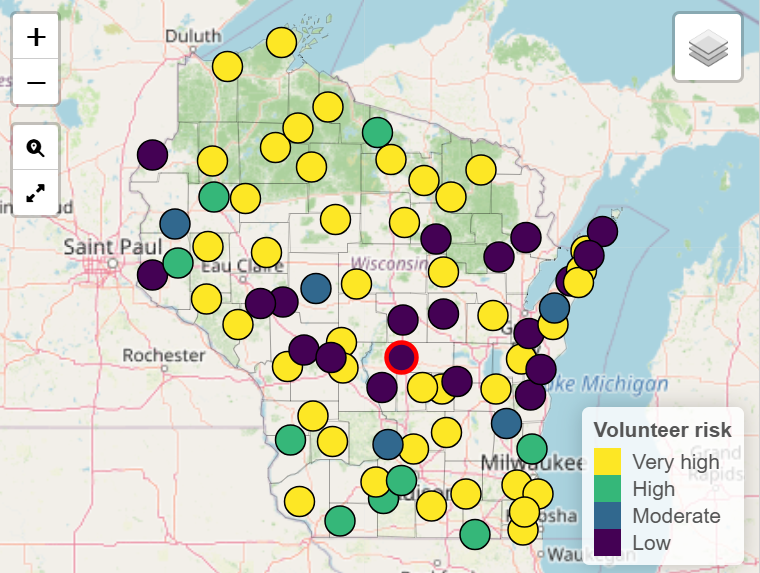
It is critical to manage volunteer/weed potatoes when environmental conditions favor germination of this unintended crop. Further, earlier season management of late blight may need to be considered given the risk of volunteers from fields which may have had late blight in the previous season.
The 2025 growing season was characterized by an absence of confirmed late blight reports in Wisconsin and much of the US. This lack of detection suggests minimal active inoculum and no clear evidence of local overwintering or early-season introduction events for this year. Nationally, the only documented genotype was the dominant US-23 lineage identified in Florida, with no reported indication of new clonal lineages or meaningful shifts in population structure during the season.
For diagnostic and management support in Wisconsin, please consider contacting Dr. Amanda Gevens, gevens@wisc.edu or our Plant Disease Diagnostic Clinic, pddc@wisc.edu.
A bookmarked, searchable digital version of the Commercial Vegetable Production in Wisconsin book (A3422) can be found here: https://vegpath.plantpath.wisc.edu/resources/a3422/
If you would like to add any email addresses to the UW Madison Division of Extension Vegetable Crop Updates Newsletter list serve, please send me a message at gevens@wisc.edu. Archived newsletters can be found here: https://vegpath.plantpath.wisc.edu/newsletter/.