Vegetable Diseases
Click on any disease listed below for more information.
-
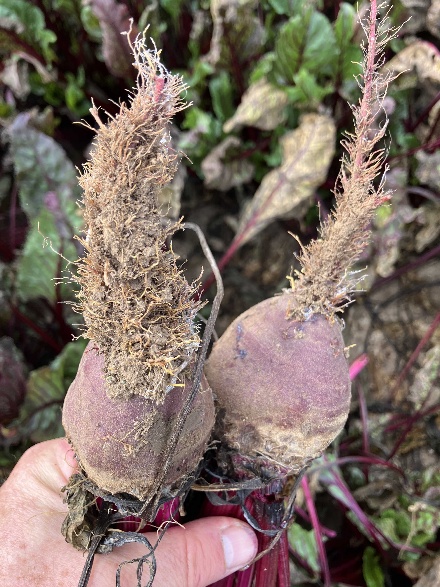
Beet Rhizomania
Rhizomania is the name of a beet disease caused by Beet necrotic yellow vein virus (BNYVV) which is transmitted by the persistent soilborne organism Polymyxa betae. In 2025, the disease was confirmed for the first time in Wisconsin table beet production. This disease is best known for its severe impacts on sugar beet systems, but table beet (Beta vulgaris) is also susceptible. Rhizomania primarily infects Beta genus plant species including sugar beet, table/red beet, and Swiss chard. Some weed hosts can be infected, which may help maintain populations in the soil. The pathogen can persist in soil for many years…
-

Brassica Alternaria Leaf Spot
Brassica Alternaria leaf spot is a fungal disease of brassica crops caused by Alternaria brassicicola. Symptoms begin as small, black lesions on leaves that enlarge to form target-like concentric rings of necrotic tissue surrounded by a yellow halo. When humidity is high, these lesions produce black spores on the leaf surface. Primary Source: Infected seed, infected overwintering plant debris, infected brassica weeds. Spread: Windborne spores, rain and irrigation splash, insects like flea beetles. Favorable Conditions: Spores are produced in high humidity (>87%) and moderate-to-high temperatures (68-88ºF). Optimal temperatures for infection are 55-75ºF.
-

Brassica Black Rot
Brassica black rot, also known as Cabbage or Crucifer black rot, is a bacterial disease of brassica crops (such as cabbage, Brussels sprouts, kale) caused by Xanthomonas campestris pv. campestris. It causes V-shaped yellow lesions that move from the outer edges of the leaves inwards, with nearby veins turning black and thickening. Foliar symptoms can appear similar to those of plant stressors including drought, overwatering, or over-fertilization. Once established in the leaves, this disease can cause black discoloration inside the stem, which will become visible when cut. As the disease progresses, the roots may also turn black.
-

Carrot Alternaria and Cercospora Leaf Blights
Alternaria and Cercospora leaf blights are common fungal diseases of carrot leaves and petioles. While neither disease directly hurts the carrot root, yield loss occurs when petioles become so brittle that they break off during mechanical harvest leaving the carrot in the ground. In warm, moist weather, Alternaria leaf spots develop rapidly so that the entire field may appear to have been injured by frost or chemicals. Crop loss will be more severe when plants become infected early in the season. Alternaria and Cercospora are difficult to distinguish in the field and often appear on the same plant. The principle…
-

Cucurbit Alternaria Leaf Blight
Cucurbit Alternaria leaf blight is a fungal disease of cucurbits caused by Alternaria cucumerina. Cucurbit crops include watermelon, cantaloupe, cucumber, zucchini, pumpkin, and winter squashes. This pathogen causes brown lesions on the leaves that can develop concentric, target-like rings and a yellow surrounding halo. Lesions can also develop on the fruit, appearing first as sunken, brown spots that can become dark and fuzzy as the lesion produces spores (sporulation). Fruit can also experience sunscald from leaf loss, as well as reduced yield. Alternaria cucumerina survives on infected soil-bound plant debris, the spores of the pathogen spread on wind, splashing water,…
-

Cucurbit Angular Leaf Spot
Cucurbit angular leaf spot is a bacterial disease that can be economically damaging to leaves, stems, and fruit of cucumbers, honeydew melon, and zucchini squash growers in Wisconsin. This disease looks somewhat like downy mildew, but is caused by a bacterial pathogen Pseudomonas syringae pv. lachrimans. Initial lesions appear as small, tan, water-soaked spots that are delineated by the veins of the leaf giving the ’angled’ or straight edge appearance of lesions on the leaves. As the lesions expand and develop, they typically turn white and papery in texture until the dead tissue falls out of the leaf, leaving a hole…
-
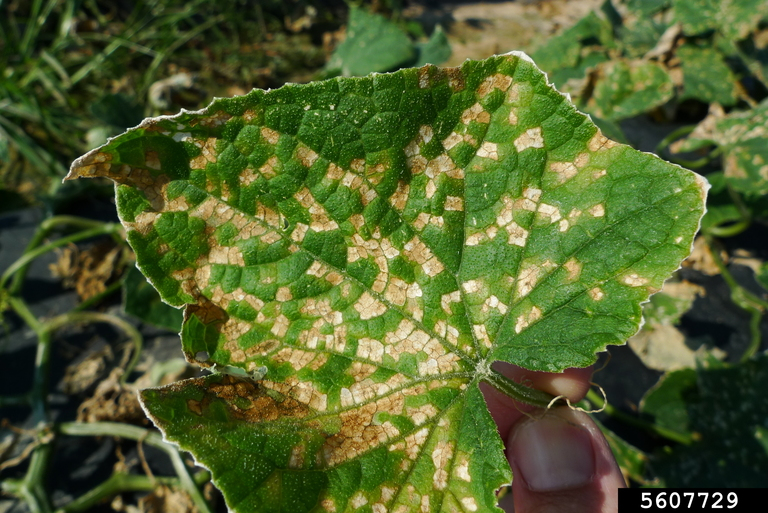
Cucurbit Downy Mildew
Cucurbit downy mildew is a water mold or oomycete disease of cucurbit crops caused by Pseudoperonospora cubensis. Symptoms first appear on the upper leaf surface as angular, vein-bounded, yellow to pale-green spots, turning brown and coalescing to turn entire leaves brown with disease progression. In very humid conditions, the underside of leaves may appear fuzzy as the pathogen produces numerous spores which enable the pathogen to spread. This foliar disease can very rapidly destroy above ground plant parts reducing potential for yield and quality, and making fruit more susceptible to sunscald and secondary pathogen infection.
-

Hop Downy Mildew
Downy mildew is a serious disease of hop caused by the fungus-like organism Pseudoperonospora humuli. Damage is dependent upon cultivar susceptibility and weather conditions during the growing season, but severe infection can lead to a complete loss in marketable yield. Symptoms of downy mildew first appear in the spring as infected shoots, often called “basal spikes”. These spikes are stunted and show chlorotic, yellow-green leaves that are brittle and curl downward. Lesions on the leaves appear angular and water soaked and are confined within leaf veins. Reproductive structures may form as a purple-gray to black downy, fuzzy growth. Infected cones…
-

Hop Powdery Mildew
Powdery mildew is caused by the fungus Podosphaera macularis and occurs in most commercial production regions around the world. The level of cone infection is directly correlated with the level of leaf infection, though even severe leaf infections do not appear to impact bine growth. Losses are associated with cone infections and the cost of controlling the disease. Signs of powdery mildew, as the name suggests, are powdery and glistening white colonies that may be discrete (affecting small, circular areas) or indiscrete (covering large areas of the plant). Expression of signs and symptoms is dependent on the cultivar, weather conditions,…
-

Hop Viruses
Several viruses and viroids can infect hop. These pathogens are especially challenging because hops are perennial and commonly propagated vegetatively. An infected plant can therefore remain in a hop yard for many years, and infected rhizomes, cuttings, or plantlets can introduce a pathogen into a new yard. Some infections cause conspicuous leaf symptoms or plant stunting. Others are essentially symptomless but can still affect plant vigor, cone yield, bitter acids, or essential-oil composition. Prevention through pathogen-tested planting material is the foundation of virus and viroid management in hops.
-
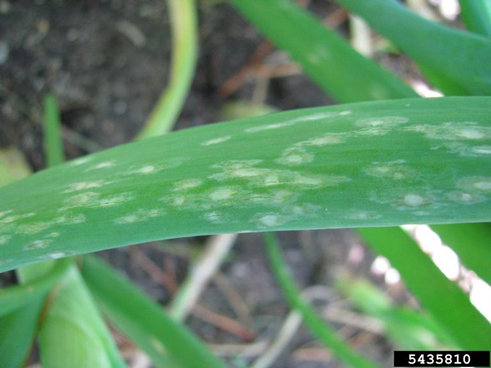
Onion Botrytis Leaf Spot/Leaf Blight
Onion Botrytis leaf blight/leaf spot is a fungal disease of alliums caused by Botrytis squamosa. Symptoms first appear as small whitish spots on the leaf. These spots are oval-shaped, and sometimes surrounded by a light green or silver halo that often appears water-soaked. Leaf tips will begin to dry and wither as the disease progresses, sometimes until the whole leaf dies back. Progressed infection can stunt bulb growth and reduce yield. Heavily infected fields often appear yellowish and blighted. Severe infection can stunt bulb growth and reduce yield.
-

Onion Downy Mildew
Onion Downy mildew is a water mold or oomycete disease of alliums caused by Peronospora destructor. It causes irregular foliar lesions that begin as pale-green, then progress to yellow or brown necrotic tissue. Eventually, lesions coalesce and lead to the collapse of the leaf. During periods of high moisture, fuzzy, gray-to-violet sporangia appear on leaf surfaces. These symptoms can also be seen on seed stalks and flowers. Bulbs can be stunted and sponge-like during systemic plant infection and, when the disease infects the bulb itself, can become watery.
-

Onion Stemphylium Leaf Blight
Description Onion Stemphylium leaf blight is a fungal disease of alliums caused by Stemphylium vesicarium. It causes oval-shaped, tan or brown lesions on the leaves, which may appear water-soaked and darker when sporulating. These lesions can enlarge and overtake entire leaves, as well as girdle seed stems. Blighted leaves can compromise the bulb, reducing yield and leading to secondary infections. Primary Source: Infected plant debris Spread: Airborne spores, often appears as a secondary infection of downy mildew lesions, herbicide or physical plant injury, and heat-stressed/drought-stressed leaves Favorable Conditions: High humidity, moderate temperatures, excess moisture from precipitation or irrigation, high dew…
-

Phytophthora Crown and Fruit Rot
Description Phytophthora Crown and Fruit Rot is a water mold or oomycete disease of several fruiting vegetable crops including cucurbits (cucumber, melon, squash), solanaceous plants (tomato, eggplant, pepper), and to a lesser extent, legumes (snap beans, lima beans) caused by Phytophthora capsici. It causes large, irregular brown spots on leaves, which expand and coalesce in warm and wet conditions. On vines, water-soaked, dark lesions can girdle the stem and cause whole-plant wilt and collapse. Phytophthora capsici also causes damping-off in cucurbits, rotting the crown and root tissues and most often resulting in plant death. Fruit rot often occurs on the side…
-

Potato Black Dot
Black dot is caused by a soil-, seed-, and debris-borne fungus that can infect roots, stolons, stems, and tubers. The pathogen is a contributor to the early die complex and is typically enhanced by stress conditions, including temperature and moisture extremes. As a result, black dot causes a reduction in yield and tuber size, and the pathogen causes tuber blemish, reducing marketability and storability. Symptoms on tubers appear as small, black, pinhead-sized structures on the skin surface.
-

Potato Brown Spot and Black Pit
Brown spot and Black pit are fungal diseases of potato caused by the fungus Alternaria alternata. On leaves, it causes relatively small dark brown spots of necrotic tissue with a dark brown margin. Starting as small lesions, the spots can coalesce to cover a large percentage of leaf or petiole surface. On tubers, the disease causes black, deep sunken pits with definite margins that often develop in storage. The pathogen causing these diseases survives on infected soil-bound plant debris and susceptible weeds. Alternaria alternata is easily confused with A. solani, causal agent of the more common and destructive disease early…
-
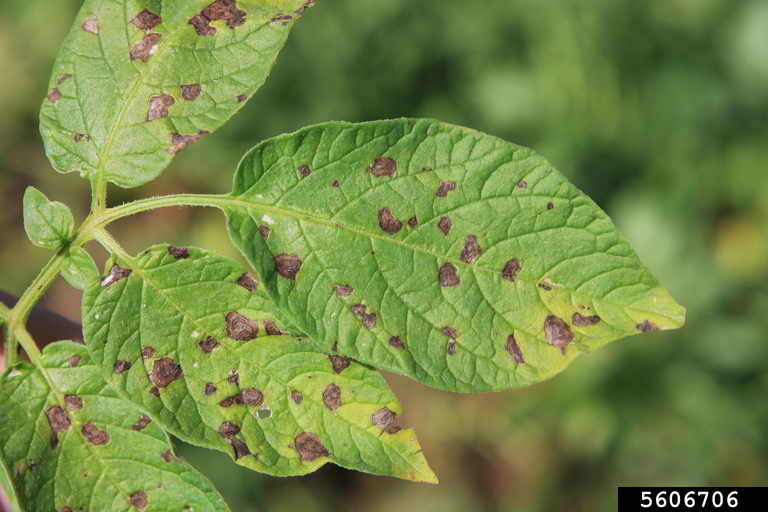
Potato Early Blight
Early blight is a common fungal disease of solanaceous crops (tomatoes, potatoes, peppers, eggplants) caused by Alternaria solani. Symptoms first appear as circular dark-brown spots on leaves and stems that can later develop concentric, target-like rings, often surrounded by yellow margins. Lesions are sometimes limited by veins, giving an ‘angular’ appearance. Early foliar symptoms often appear near the base of the plant, spreading up to higher leaves as the disease progresses. On tubers, lesions appear as dark, sunken, cork-like spots with raised margins, although tuber symptoms are less frequently seen in the Midwestern U.S.
-
Potato Late Blight
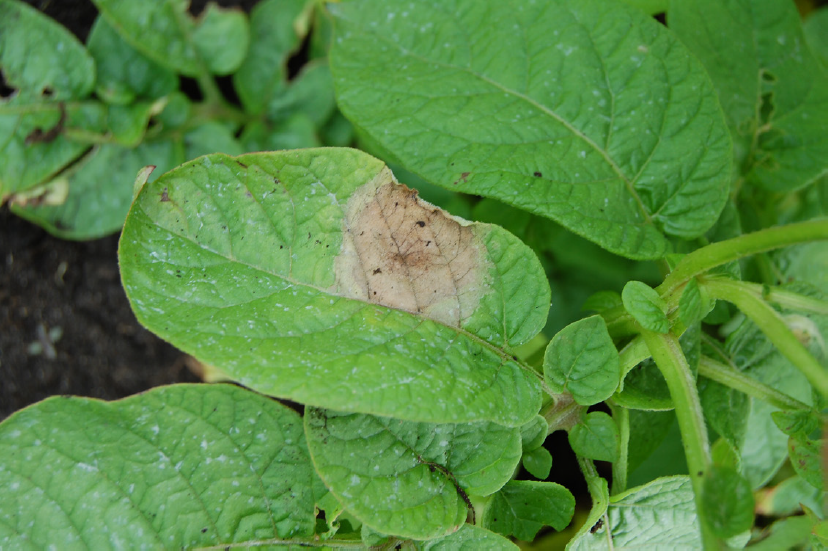
Late blight is a disease that typically causes severe symptoms on flowering plants of the family Solanaceae. The pathogen that causes late blight, Phytophthora infestans, infects a variety of Solanum spp., including eggplant, pepper, nightshades, and petunia. However, it is most infamously known for its destruction of potato, S. tuberosum, and tomato, S. lycopersicum. Symptoms of late blight can occur on all parts of a potato plant. Leaf symptoms include circular, necrotic or brown lesions surrounded by collapsed pale or chlorotic (pale green to yellow) tissue. Enlarged, water- soaked or wet and oily-appearing leaf lesions often give rise to sporulation,…
-
Potato Pink Eye
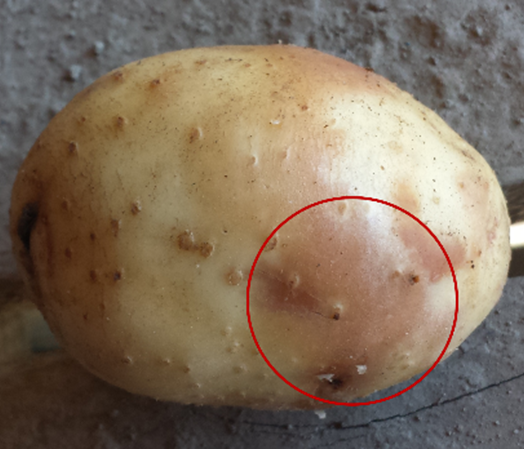
Pink eye, or periderm disorder syndrome, is a disorder of potato tubers that can cause costly storage losses for potato growers and can reduce tuber quality to the point where tubers will be rejected by potato processors. Pink eye not only directly affects tubers, but also makes tubers more susceptible to diseases such as Pythium leak, bacterial soft rot (see UW Plant Disease Facts D0010, Bacterial Soft Rot), pink rot, and Fusarium dry rot. These diseases cause additional storage losses and reduction in quality.
-

Potato Pink Rot
Potato pink rot is a water mold or oomycete disease of potato tubers caused primarily by Phytophthora erythroseptica. The soilborne pathogen causes darkened, water-soaked lesions with defined margins near the stem-end of the tuber, and is often identified by the characteristic pink/salmon color and ammonia-like odor of a potato cut and exposed to air after 20-30 minutes. Potato vines can also appear stunted or wilted later in the season, with noticeable leaf yellowing and drying as the wilt moves up the stem.
-
Potato Pythium Leak
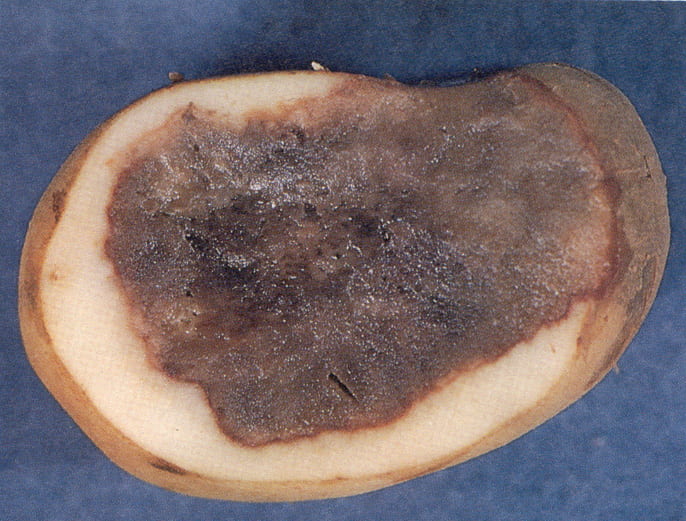
Pythium leak is caused primarily by the soilborne oomycete, or “water mold” pathogen Pythium ultimum, now also referred to as Globisporangium ultimum. The pathogen persists in soil and most commonly infects tubers through wounds created during harvest and handling. Consequently, conditions at harvest can have a major influence on the amount of disease that ultimately develops in storage. Early symptoms typically develop around a wound as light tan, water-soaked tissue. As infection progresses, the affected area becomes wet and spongy and may swell slightly. A distinct dark boundary can develop between diseased and healthy tissue. When infected tubers are cut…
-

Potato Silver Scurf
Description Silver scurf is a fungal blemish disease of potato tubers caused by the fungus Helminthosporium solani. The pathogen causes tan-to-gray circular lesions typically initiating on the stem-end of the tuber surface, often appearing shiny and silver when wet. Infection reduces both the visual appeal and quality of potato tubers, as the pathogen causes damage to the periderm or skin which enables the onset of other pathogens or enhanced desiccation. This disease is primarily a concern for stored, commercial fresh market potatoes, but the disease can also render potatoes for processing (ie: potato chips) less useful due to increased depth of…
-
Potato White Mold
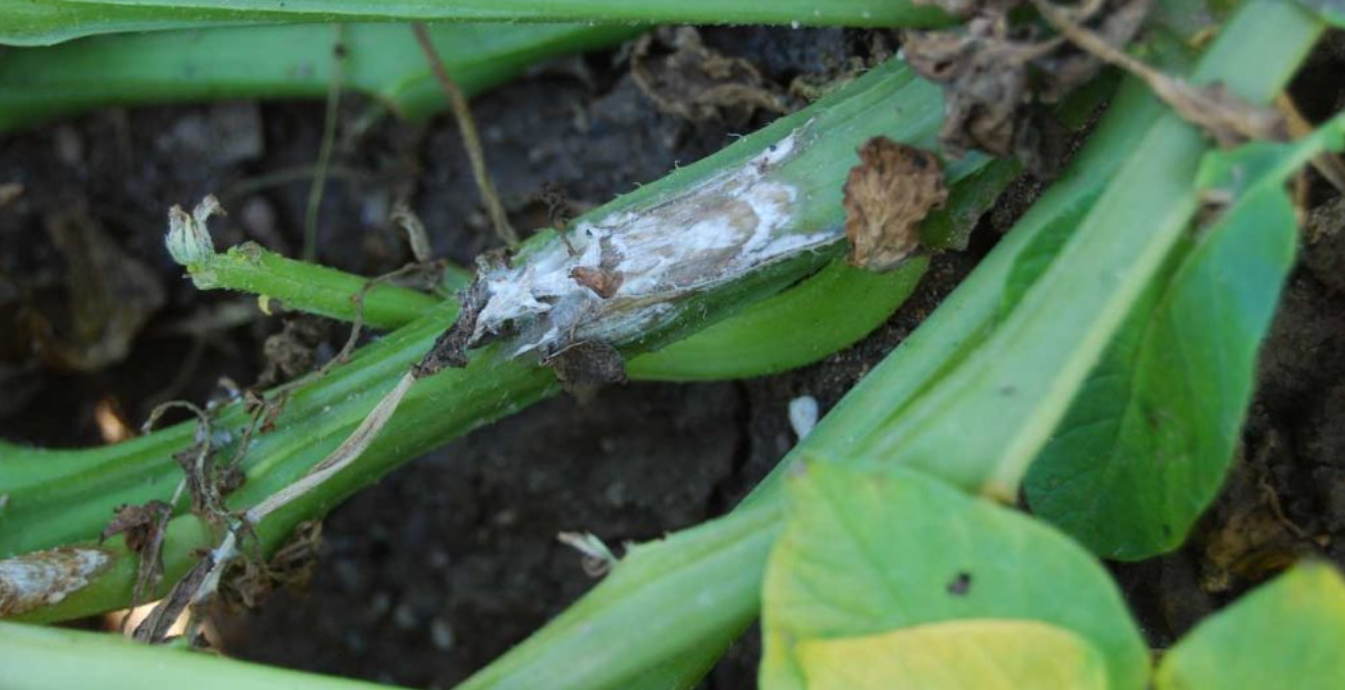
White mold (sometimes called Sclerotinia stem rot) is a soilborne fungal disease caused by Sclerotinia sclerotiorum that impacts potatoes and many other broad-leaved crops (>400 plant species). The severity of the disease, and resulting yield/quality losses, can vary greatly and depend upon the quantity of inoculum in soils, environmental conditions, and planting factors including cultivar, crop rotational history, and plant spacing. Symptoms have been showing up over the past 2 weeks in central Wisconsin potatoes.
-
Rhizoctonia
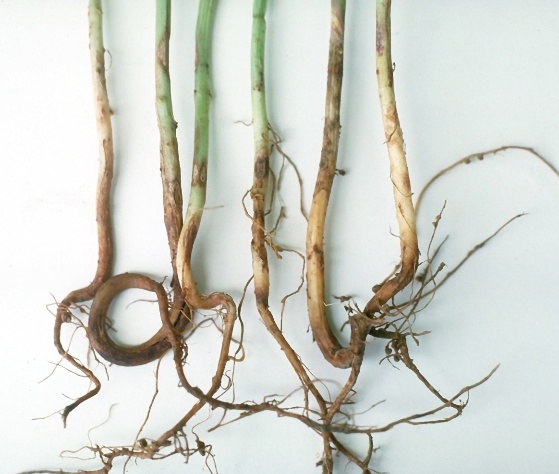
Rhizoctonia, caused primarily by Rhizoctonia solani, is one of the most common and economically important soilborne diseases affecting vegetable production systems. Its broad host range, persistence in soil, and ability to attack plants at multiple growth stages make it especially challenging in diversified vegetable operations. In Wisconsin, Rhizoctonia is particularly problematic during cool to warm spring transitions, periods of high soil moisture or poor drainage, and in fields with a history of vegetable or susceptible rotational crops. Crops impacted by Rhizoctonia are many and include potatoes, beans, carrots, cole crops (cabbage, broccoli), cucurbits, onions, and leafy greens. This range makes…
-

Tomato Bacterial Canker
Tomato Bacterial Canker has been diagnosed on a number of Wisconsin farming operations this summer so far. This potentially serious disease of field- and greenhouse-grown tomatoes caused by the bacterium Clavibacter michiganensis (historically referred to as Clavibacter michiganensis subsp. michiganensis). The disease can be particularly challenging because the pathogen can infect plants systemically, move readily during transplant production and routine crop handling, and cause substantial losses once established. In Wisconsin, bacterial canker has periodically been confirmed in commercial tomato production, and rapid recognition and containment are important when the disease is suspected. Laboratory confirmation is strongly recommended because several other…
-

Tomato Early Blight
Early blight is one of two common fungal diseases that can devastate tomatoes in both commercial settings and home gardens. Early blight can also be a serious disease on other popular solanaceous vegetables including eggplants, peppers, and potatoes. Symptoms of early blight first appear at the base of affected plants, where roughly circular brown spots appear on leaves and stems. As these spots enlarge, concentric rings appear giving the areas a target-like appearance. Often spots have a yellow halo. Eventually multiple spots on a single leaf will merge, leading to extensive destruction of leaf tissue. Early blight can lead to…
-
Tomato Late Blight
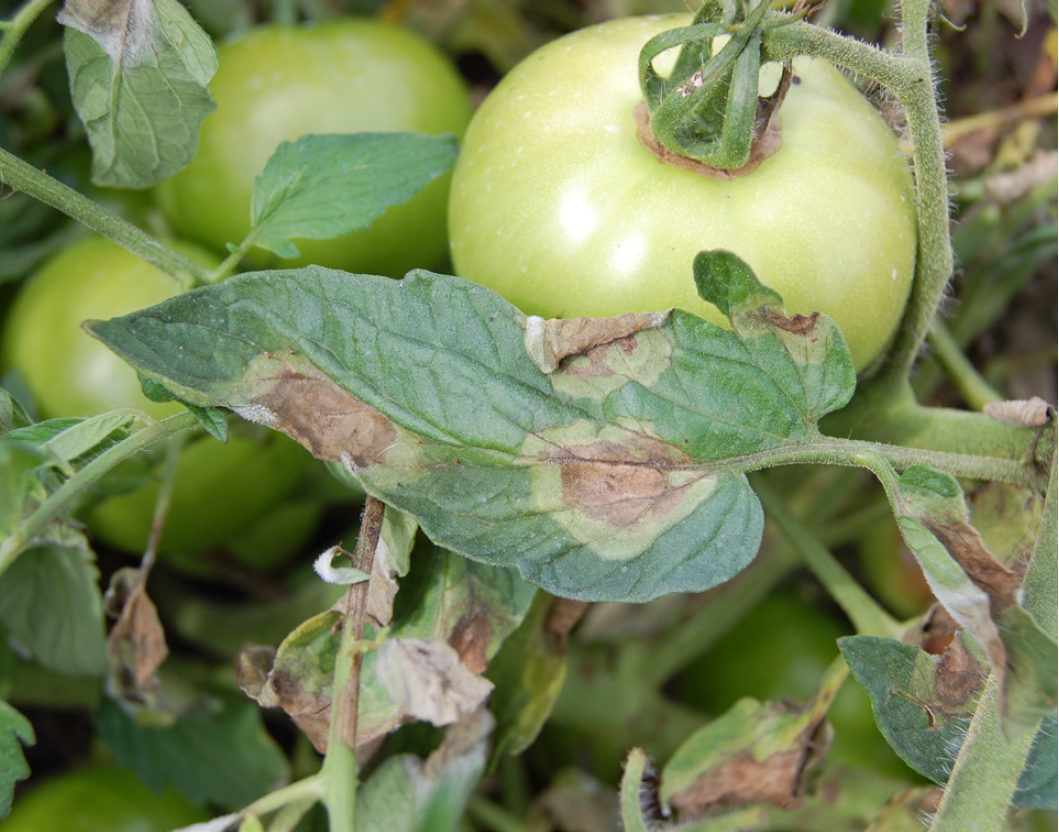
Late blight is a serious disease that affects a variety of Solanum spp., including eggplant, pepper, nightshade weeds, and petunia. However, it is most infamously known for its destruction of potato, S. tuberosum, and tomato, S. lycopersicum. Symptoms of late blight may be found on any above-ground part of the tomato plant. Infected leaves typically have green to brown patches of dead tissue surrounded by a pale green or gray border. When the weather is very humid and wet, late blight infections can appear water-soaked or dark brown in color, and are often described as appearing greasy. White, fuzzy growth…
-
Tomato Septoria Leaf Spot
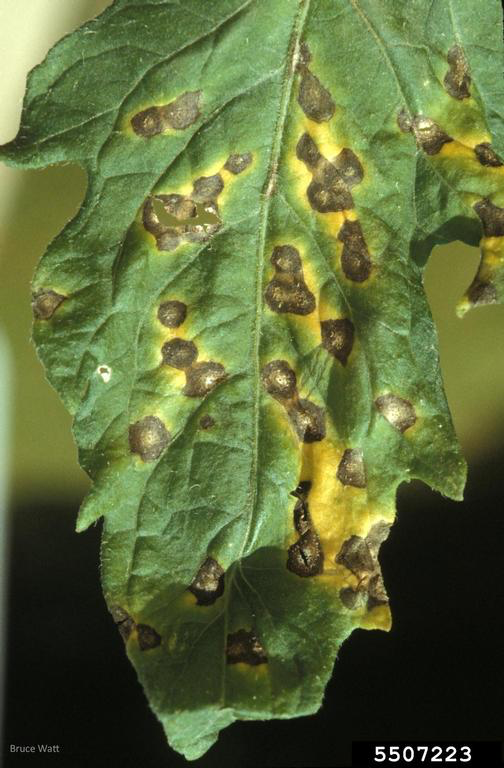
Description Tomato Septoria leaf spot is a common fungal disease of solanaceous crops caused by Septoria lycopersici. Symptoms appear on the leaves as circular, tan-to-gray spots with darker brown margins and dotted with dark, raised pycnidia inside the lesion. These lesions are often surrounded by a yellow halo. The disease typically develops on lower leaves first, moving up to higher leaves as infection progresses. Lesions can converge and lead to defoliation of lower leaves, and in severe cases the death of an entire plant. Stem lesions appear similar to leaf lesions, but are often darker. Fruit lesions are uncommon, but…
For diagnostic and management support in Wisconsin, please consider contacting Dr. Amanda Gevens (gevens@wisc.edu) or our Plant Disease Diagnostic Clinic (pddc@wisc.edu).
Last updated: