Protecting Winter Squash Quality from Harvest through Storage
As Wisconsin’s vegetable season moves into its final harvests, winter squash and pumpkins require careful handling to preserve the quality produced in the field. Fruit that appear marketable at harvest can deteriorate rapidly in storage when rind injuries, immature fruit, field infections, condensation, or poor air circulation favor decay. Careful harvest, grading, curing, and storage management are the most effective tools for limiting losses. Many storage rots begin in the field but do not become apparent until weeks after harvest. Other decay organisms enter through cuts, bruises, broken stems, or injuries caused during harvest and handling. Although the pathogens involved may differ, the most important management practices are broadly similar: harvest mature fruit under dry conditions, minimize injury, keep fruit dry, exclude diseased or damaged fruit from storage, and maintain appropriate temperature and ventilation.
Harvest under optimal conditions
Whenever possible, harvest winter squash after the fruit have reached full maturity. Indicators of maturity include the development of characteristic rind color, a hard rind that resists puncture by a thumbnail, and drying or corking of the stem. Immature fruit generally have softer rinds, lose water more rapidly, and are more susceptible to injury and decay.
Harvest before a hard freeze. A light frost may injure vines without immediately damaging mature fruit, but freezing injury to the fruit can lead to rapid deterioration in storage. Fruit from frost-damaged fields should be evaluated carefully and marketed promptly if there is concern that the rind or underlying tissue was injured.
Dry weather is preferred for harvest. Handling wet fruit increases the likelihood of spreading pathogens and placing free moisture into bins or storage areas. If fruit must be harvested when wet, provide adequate air movement and allow surfaces to dry before packing or placing fruit into storage. Cut fruit from the vine with a clean knife or pruning tool, leaving a sound stem attached when appropriate for the squash type. Do not lift or carry fruit by the stem. Broken stems create wounds that provide ready entry points for decay organisms. Harvest crews should also avoid dropping, throwing, or overfilling containers. Even when the rind remains intact, impact bruises can damage the tissue beneath it and become visible only after the fruit have been stored.
Storage should be reserved for mature, dry, high-quality fruit. Inspect squash carefully as they are harvested and again before they enter storage. Remove fruit with:
- Cuts, punctures, cracks, bruises, or broken stems
- Soft, water-soaked, sunken, or discolored areas
- Active mold or signs of decay
- Extensive insect feeding or mechanical injury
- Symptoms consistent with Phytophthora fruit rot
- Significant sunscald, chilling, or frost injury
Fruit with questionable lesions should not be mixed with sound fruit intended for long-term storage. One infected fruit can produce abundant inoculum and contribute to decay of neighboring fruit, particularly when surfaces are wet or fruit are packed tightly together. Keep cull piles away from production and storage areas. Diseased fruit left near packing areas can serve as a continuing source of spores or bacterial inoculum.
Cure appropriate squash types carefully
Curing can promote wound healing, harden the rind, and improve storage life in several winter squash types. Where recommended for the cultivar, curing is commonly accomplished by holding fruit for approximately 7–10 days under warm conditions—generally around 80–85°F—with good air movement and moderately high relative humidity. Curing is not appropriate for every type of winter squash. Acorn squash, for example, can lose quality and develop undesirable color changes when subjected to prolonged warm curing. Recommendations also differ among delicata, spaghetti, buttercup, butternut, hubbard, and other specialty types. Growers should match curing practices to the squash class and cultivar rather than treating all winter squash alike. Curing will not restore fruit that are immature, frost-injured, or already infected. Diseased fruit may deteriorate more rapidly under warm curing conditions and should be removed beforehand.
Maintain suitable storage conditions
Most winter squash store best near 50–55°F with moderate relative humidity, good ventilation, and minimal temperature fluctuation. Temperatures below approximately 50°F can result in chilling injury in susceptible squash, while warmer conditions can accelerate water loss, respiration, and decay. Excess humidity, condensation, and free moisture favor many storage-rotting organisms. At the same time, very dry air can cause excessive weight loss and shriveling. Avoid placing warm fruit directly into a cool, poorly ventilated room where moisture may condense on the rind. Arrange bins or containers to permit air movement. Avoid placing fruit directly on damp floors or against exterior walls where temperature differences may cause condensation. Storage rooms, bins, and handling equipment should be cleaned before use, and crop debris and decayed fruit should be removed promptly. Inspect stored squash regularly. Early removal of a decaying fruit can prevent leakage, contamination, and direct spread to neighboring fruit. The first inspection should occur soon after storage begins because injuries and latent infections may become apparent during the initial weeks.
Recognizing common fruit rots
Several diseases may contribute to winter squash losses during harvest and storage. Symptoms can overlap, and laboratory diagnosis may be necessary when identifying the cause will affect future management.
Black rot or gummy stem blight may produce dark, irregular, or sunken lesions on fruit. Infections can begin in the field and continue to develop after harvest. Fruiting bodies may appear as small black dots within affected tissue.
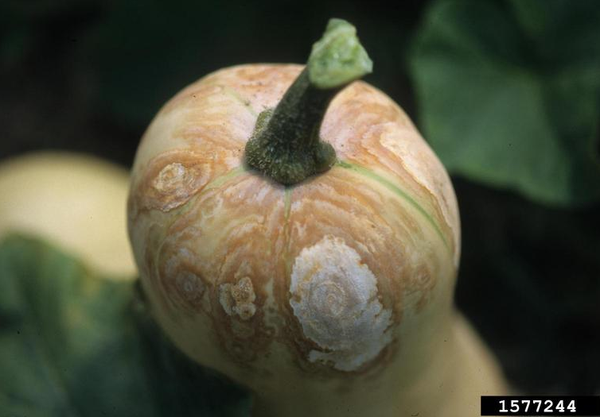
Fusarium rots often develops at wounds, stem scars, or areas previously damaged by insects or other pathogens. Lesions may be dry or sunken and can develop white, pink, or reddish fungal growth, depending on the species involved.
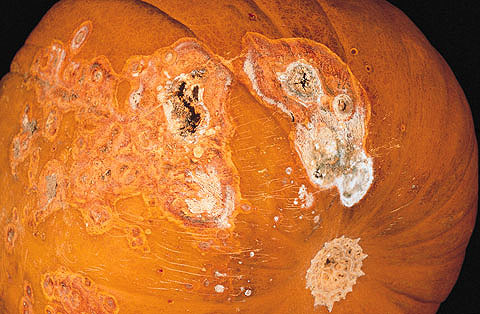
Bacterial soft rot causes rapidly advancing, soft and frequently wet breakdown. Bacteria generally enter through wounds or tissues damaged by another disease. Warm temperatures and free moisture strongly favor development.
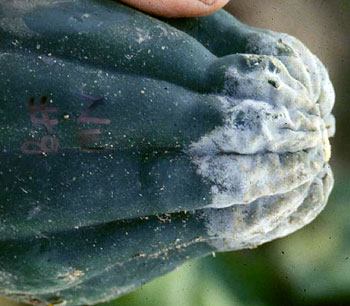
Phytophthora fruit rot, caused by Phytophthora capsici, may begin as water-soaked lesions that expand rapidly. Under humid conditions, affected areas can develop white, yeast-like or powdery growth. Fruit from infested areas of a field should be handled cautiously because apparently sound fruit may develop symptoms after harvest. Suspect fruit should not be placed into long-term storage.
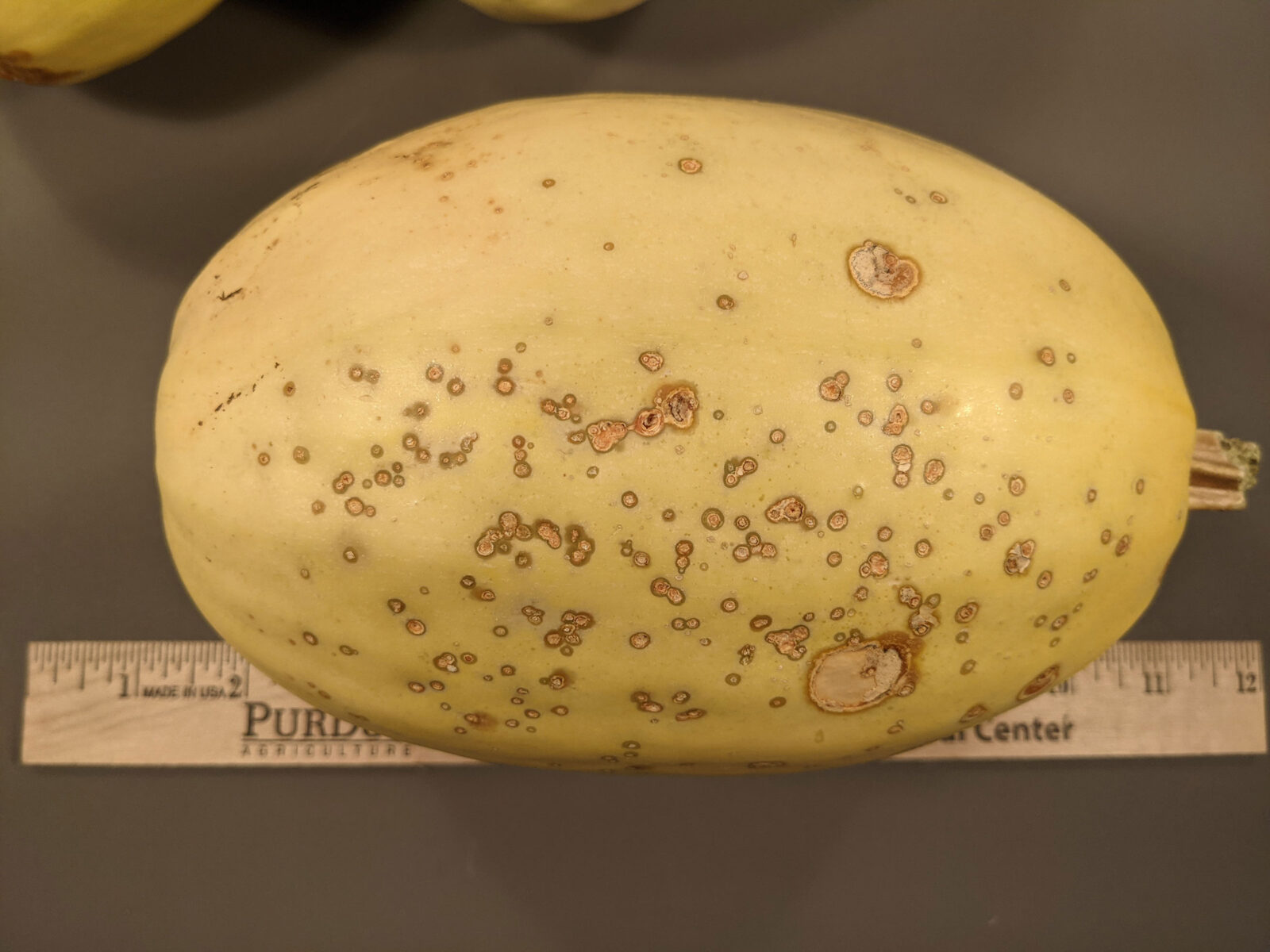
Plectosporium blight can cause numerous tan-to-white, corky lesions on fruit and stems. Although affected fruit may remain firm initially, severe lesions reduce marketability and may provide opportunities for secondary decay organisms.
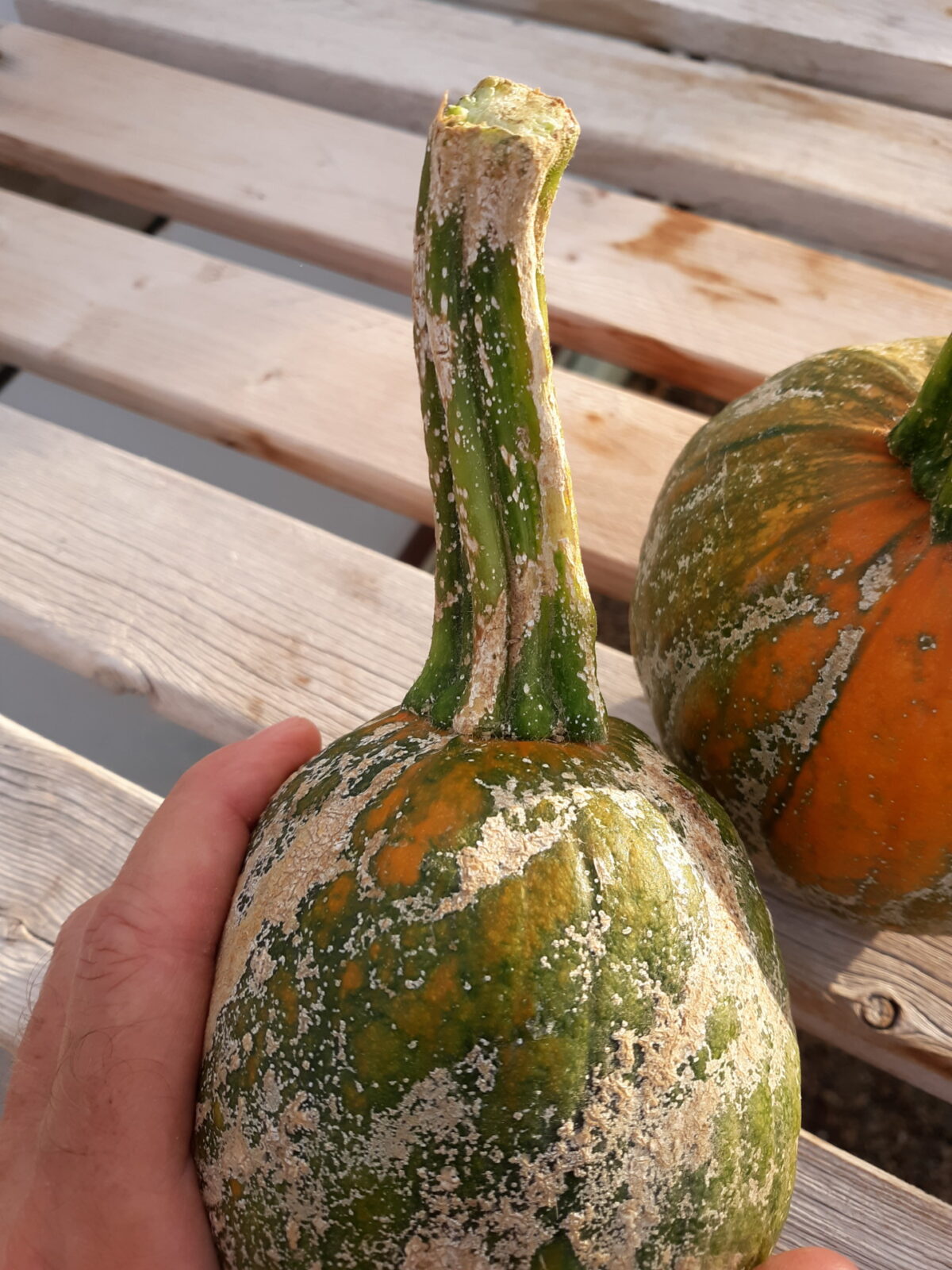
For most storage diseases, there is no curative treatment once decay is established. Postharvest disease management therefore depends heavily on preventing injury, excluding infected fruit, maintaining sanitation, and managing the storage environment.
Use this harvest to inform next season
Record where diseased fruit occurred within the field. Concentration in low or poorly drained areas may be particularly important for Phytophthora management. Also note cultivar, crop rotation, irrigation practices, harvest conditions, and the types of lesions observed. When possible, submit representative fruit for diagnosis while symptoms are still developing. A confirmed diagnosis can guide decisions about crop rotation, field selection, drainage, sanitation, resistant or less-susceptible cultivars, and future disease-management programs.
Stored winter squash fruit will perform best when fruit are harvested and stored when:
- Mature and free from frost injury
- Harvested and handled under dry conditions
- Fruit are not wounded or diseases
- Cure appropriately for the squash type
- Maintain storage area clean, well ventilated, and near 50-55°F
- Inspect fruit routinely and remove decay regularly
The quality of winter squash in December is strongly influenced by decisions made in September. Gentle handling, careful grading, appropriate curing, and attentive storage management can substantially reduce losses and extend the marketing period for a valuable fall crop.
For diagnostic and management support in Wisconsin, please consider contacting Dr. Amanda Gevens (gevens@wisc.edu) or our Plant Disease Diagnostic Clinic (pddc@wisc.edu).
Last updated: